news Cargo riskCompliance & regulation Splash247
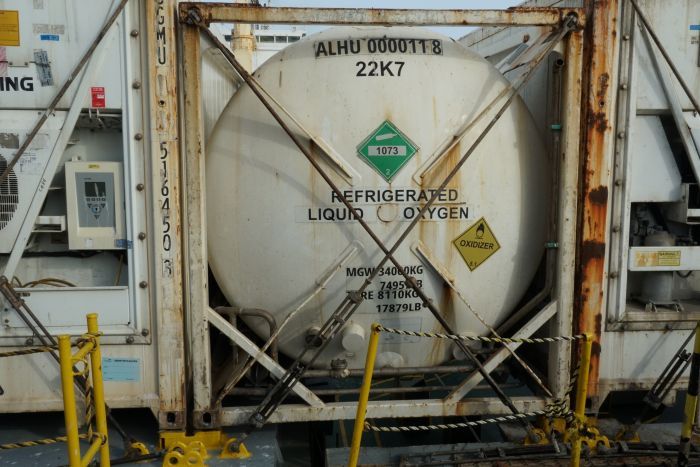
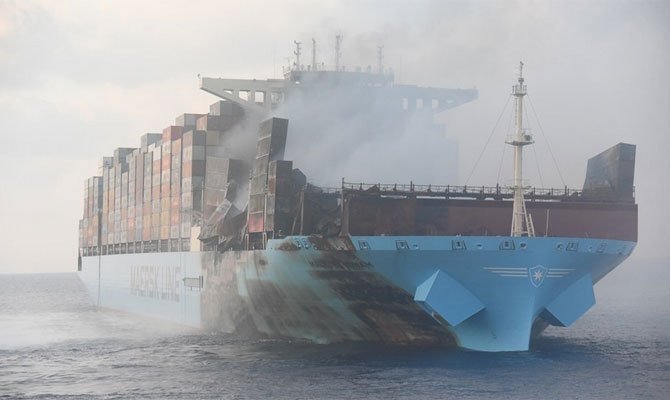
Captain Naveen Singhal and Captain M.M. Saggi have suggestions on how to clamp down on the scourge of misdeclared cargoes. Containerisation has been a game-changer in the carriage of goods. However, in the last decade or so, unscrupulous shippers and freight forwarders to save a few dollars on freight, have seriously jeopardised an efficient and safe mode of cargo in containers by falsifying container weights, cargo contents as well as not packing and lashing goods within the container as per requirements of international standards and the International Maritime Dangerous Goods (IMDG) code. To name a few container ship accidents in recent years: 2012’s MSC Flaminia, 2017’s APL Austria, 2018’s Maersk Honam, 2020’s ONE Apus, 2021’s Maersk Essen, Maersk Eindhoven, XPress Pearl, and MSC Messina, and from this year there’s been the MSC Elsa-3, Grande Brasile, Altay, and Wan Hai 503. As per Lloyd’s Register, misdeclared cargo (weight and contents) is the third contributing factor causing containership accidents. Cumulative under-declaration of container weight can lead to serious stability issues. Stowing a heavy 18-ton container declared by the shipper as eight tons on the higher side can result in a top-heavy situation, making the vessel “tender” in maritime jargon. A tender ship is prone to heavier rolling, which increases stress on container stacks and lashings, far in excess of the designed permissible architecture for the ship, resulting in containers breaking loose and falling overboard in the sea. Storing an exothermic (giving off heat) cargo next to a flammable liquid may not cause any harm while the container lies stable in a yard, however, a vessel’s motion in a seaway and marine environment can result in thermal runaway, combustion, fire, explosion and release of flammable, toxic gases. Ships are neither equipped nor are seafarers trained to handle such extraordinary chemical disasters. Despite the mandatory requirement by IMO in July 2016, which made verified gross mass (VGM) a mandatory requirement, shippers and freight forwarders continue to flout rules and unfortunately, have hardly been hauled up. A shipowner pays a heavy price for reasons beyond the scope of their ship operation business. On the other hand, international customs are neither equipped nor required as per chapter three of the revised Kyoto Convention from the World Customs Organization and SAFE Framework of Standards (2005) to verify the content and weight of every container. They rely on what is declared by a shipper or freight forwarder in the shipping bill. Relying exclusively on a shipper or freight forwarder’s declaration is the big hole and the Achilles’ heel in this door-to-door service. Essential plugs we recommend include an independent body approved by the administration (like a classification society) should be appointed to verify contents, weight, packaging and lashing at the stuffing stage, since stuffing is the most critical process in a container’s journey. Such a verification should become a prerequisite for customs to issue the cargo manifest. It should be mandatory for every shipper and freight forwarder to obtain an IMO number as a unique identity and tag this in the shipping bill and customs manifest of every container stuffed by a shipper or a freight forwarder. The International Civil Aviation Organization requires shippers and freight forwarders to be trained in handling IMDG cargo. A similar requirement should become mandatory for shippe
Excess, unidentified baggage in containers is breaking the back of shipowners
Splash247
Read full article at Splash247 →
Opens Splash247 in a new tab