news Compliance & regulationDecarbonization & energy Splash247
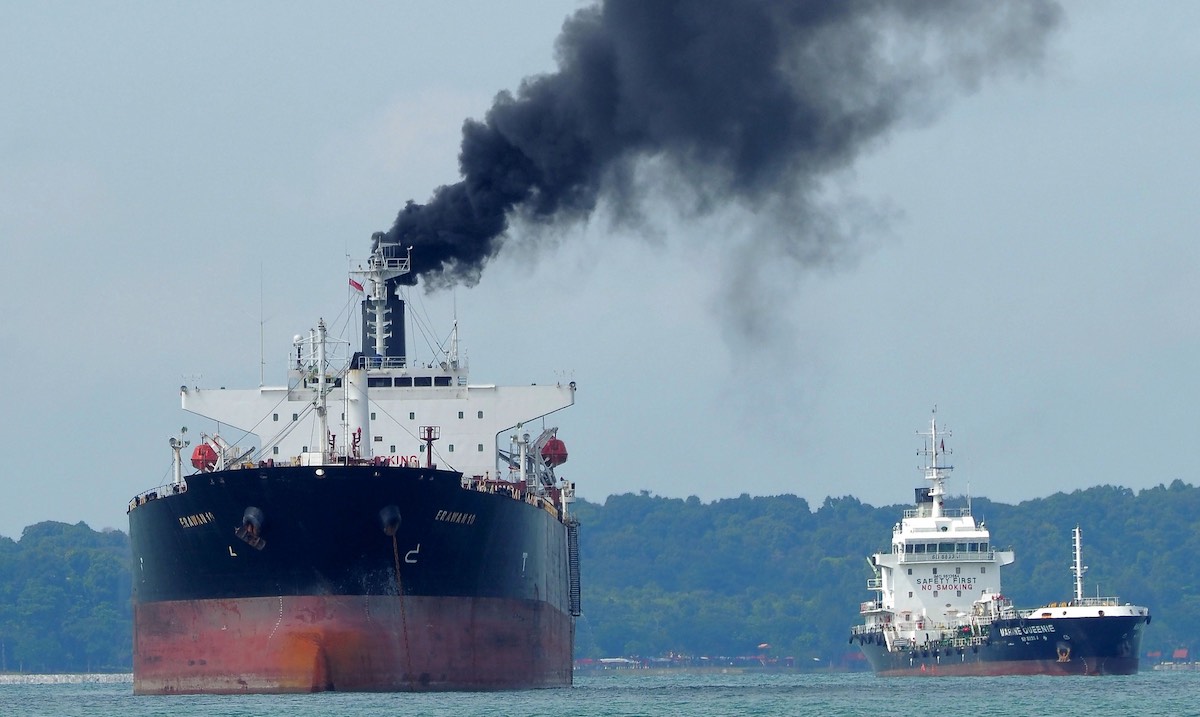
Calls are growing for every ship’s emissions data to be made public. Currently fuel consumption and emission data is collected by ship operators and reported to their flag states. They need to verify and submit it to the International Maritime Organization (IMO) which then aggregates it and internally publishes it. Currently the system only allows access to this data to IMO member states, with the shipping companies retaining ownership of it. Michael Parker, a veteran ship financier with Citi and founder of the Poseidon Principles, made headlines this month calling for this emissions data to be made public while speaking at the TradeWinds Shipowners Forum in Tokyo, a statement that has quickly gained support from many NGOs. “Shipowners need to be held accountable for their emissions and for the impact on climate change and portside communities,” said Erika Thi Patterson, senior director of the climate campaign for Pacific Environment. “Full transparency and public access to shipping emissions data are essential to steering the industry towards full decarbonisation,” said Anaïs Rios, shipping policy officer at Seas At Risk. “However, banks also have a critical role to play: they must offer better loans with lower interest rates if the shipping sector is to invest in newbuild vessels with advanced greener technologies, such as wind-propelled ships.” Publishing fuel and emission data is a no-brainer Felix Klann, sustainable shipping policy officer at Transport & Environment, said: “Publishing the fuel and emission data already collected and reported by ship operators is a no-brainer and would come at minimal effort and cost.” Klann said it would be a largely administrative effort to either mandate companies to publish this data directly or change access rights at IMO. Similarly, the flag states could publish the data for their respective companies and vessels. Since ships and companies and ships are already collecting this information, national port-state regulation could require them to share this information as well without any significant delay. For example, the European Union can unilaterally require vessels to share IMO-regulated data within the EU MRV via the Thetis platform. “Keeping this data locked away increases uncertainty for the large investments in sustainable fuels, infrastructure, and technologies required to decarbonise international shipping. This is the opposite of the certainty and reliable policy signals the finance sector has been calling for,” Klann argued. A spokesperson for the International Chamber of Shipping, shipowners’ largest lobby group, told Splash Extra: “The primary focus must be to have global regulation that delivers workable, sustainable and equitable reduction in emissions. The IMO is working to enhance their processes to regulate emissions from ships and have already implemented systems that can be used to identify the amount of fuel being consumed by shipping.” A spokesperson for BIMCO, another shipping lobby group, said her organisation would need to have a closer look at any specifics first before commenting on any plan to make such data public. “Sometimes using raw emissions data can be complicated when using it to draw conclusions,” the BIMCO executive said. A spokesperson for IMO said any decision to make emissions data public would be down to member states. Member states party to MARPOL Annex VI would need to propose and support and then adopt an amendment to the relevant regulation to make pu
Calls grow for every shipowner to reveal emissions data
Splash247
Read full article at Splash247 →
Opens Splash247 in a new tab
