news Markets & tradeDecarbonization & energy Splash247
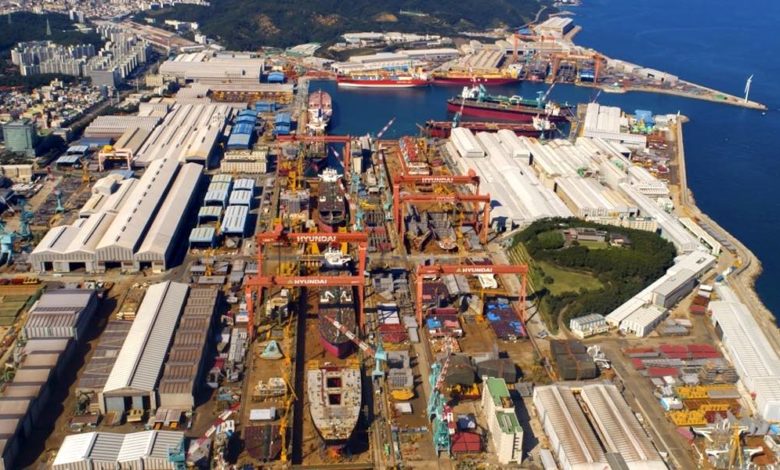
Sporting jeans and a rollneck rather than the standard overalls and helmet of his peers, Kisun Chung, the third generation of the Chung family at the helm of HD Hyundai, South Korea’s largest shipbuilder, has for the past few years trekked out to Nevada once a year to speak and exhibit at CES, a high-profile Las Vegas tech event where his company likes to pitch itself as a “future builder”. The yard is one of shipping’s leaders when it comes to artificial intelligence and autonomous technology. It is far ahead of most of its competitors around the world in developing a smart shipyard. As a very visible sign of how the business of shipbuilding is changing, HD Hyundai has just signed a deal with an American company to get humanoids welding, helping to alleviate ongoing workforce shortages. Senior vice president Dong-ju Lee said: “Our goal is a smart shipyard where humans and intelligent robots collaborate seamlessly.” However, it is important to bear in mind, HD Hyundai is a bit of an outlier, few yards match it in the world for its appetite for innovation. In a recent poll for Splash, most readers felt shipyards could be doing more to foster innovation and new designs. Andrew Airey, who heads up Thai shipmanager Highland Maritime, says simple immediate things yards could address include improving the steelwork and paint protection systems to significantly reduce lifetime steelwork maintenance as well as improving machinery design and reliability to significantly reduce the lifetime maintenance requirements necessary for semi/fully autonomous vessels. Many yards remain capex-focused, not lifecycle-optimised Craig Tulk, a product business analyst at SSI, tells Splash Extra: “Our industry is conservative, and owners will always be the ones who drive the latest innovations in vessel design.” However, Tulk did say that increasingly, shipyards are working with owners as partners to achieve “loftier” goals. Progress is visible, but again it is not standard across the industry, according to Ajay Chaudhry, the CEO of shipmanagement at Synergy Marine Group. “While a few advanced shipbuilding nations are pushing boundaries—particularly in areas like LNG, ammonia, and dual-fuel readiness—design cycles remain heavily owner-driven,” Chaudhry says. For real innovation, he is calling for tighter shipyard-designer-operator loops, and stronger incentives. “A shared commitment to lifecycle outcomes—and specifically addressing fuel flexibility, emissions profile, and digital readiness—can turn yards into innovation partners, rather than just builders,” Chaudhry says. Manish Singh, the CEO of Aboutships, a maritime transaction advisory, says pressure is building on yards to deliver more. “The regulatory clock and new fuels are forcing change, but inertia is high,” Singh says, adding: “Many yards remain capex-focused, not lifecycle-optimised.” Peter Schellenberger, founder of Novamaxis, a maritime consultancy, hits out at the lack of standardised systems hindering progress at yards around the world. “Compared, for example, to the airline industry, the varieties of execution and components used in shipbuilding are totally not aligned and far from standardisation, even for same vessel types. Even sister vessels built in the same yards may not have the same equipment list, which in effect is a real hindrance to speed up the standardisation which is necessary to propel forward more autonomous shipping,” Schellenberger argues. While some yards actively invest in R
Are shipyards doing enough to transform shipping?

Splash247
Read full article at Splash247 →
Opens Splash247 in a new tab