news Geopolitical riskSafety & casualty Hellenic Shipping News
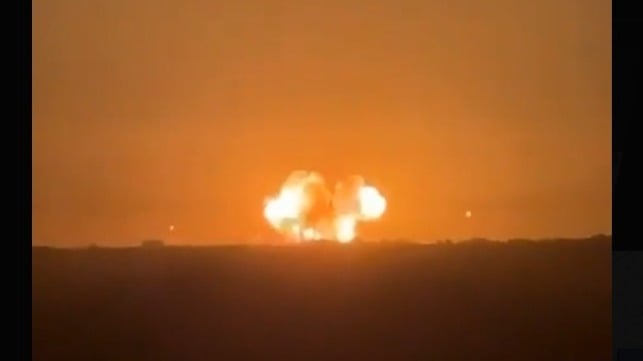
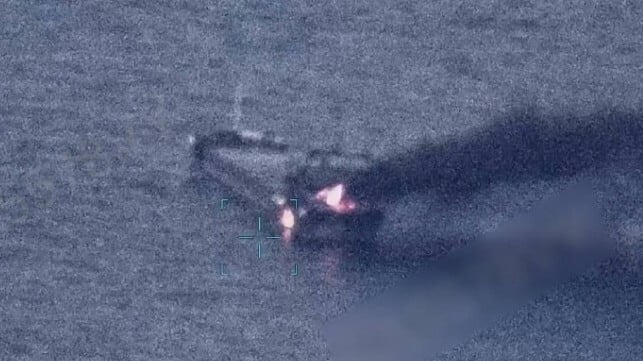
Russian cargo ship sunk off Spain carried nuclear reactors for North Korea, probe reveals in International Shipping News 13/05/2026 Spanish investigators have discovered that the Russian cargo ship that sank in the Mediterranean in 2024 — originally believed to be part of a weapons retrieval mission to Syria — was secretly carrying nuclear reactor components bound for North Korea. A Russian cargo ship that sank in the Mediterranean Sea between Spain and Algeria in December 2024 following explosions in its engine room was carrying components for two submarine nuclear reactors likely destined for North Korea, an investigation has revealed. The Ursa Major sank on 23 December with 16 crew members on board. Fourteen were rescued and brought to Spain, while two crew members — second engineer Nikitin and engineer Yakovlev — remain missing and are presumed dead. Spanish investigators now believe the vessel may have been deliberately sunk by a Western military using a rare supercavitating torpedo to prevent Russia from delivering advanced nuclear technology to North Korea, according to details of the Spanish probe obtained by CNN. The Russian Foreign Ministry initially said the vessel sank after an “explosion in the engine room” but provided no explanation for the blast. However, the ship’s Russian captain later told investigators that items declared on the ship’s manifest as “non-dangerous merchandise” — two large hatch covers — were actually components for two nuclear reactors similar to those used in submarines. The captain also revealed that he thought the ship would eventually be diverted to the North Korean port of Rason to deliver the reactors, according to a source familiar with the investigation. He did not further discuss the cargo due to fears for his safety. The vessel, previously known as Sparta III, was constructed in 2009. While its official manifest stated it was travelling from St Petersburg to Vladivostok carrying two large cranes, 129 empty containers and hatch covers, investigators have questioned why Moscow would send such cargo by sea around the world rather than using the country’s extensive rail network. The investigation suggests the cranes were on board to assist with the delivery of the sensitive nuclear cargo upon arrival in North Korea. Some details of the Spanish investigation into the incident were initially published by the Murcian local newspaper La Verdad in December 2024. Suspicious circumstances and Russian interference The ship was operated by Oboronlogistika, a company owned by the Russian Ministry of Defence. Just two months before the sinking, Oboronlogistika announced its ships had been licensed to carry nuclear material. The vessel had been under US and UK sanctions since Russia’s full-scale invasion of Ukraine in 2022, due to its owner’s role in supplying cargo to the Kremlin’s military. The sinking occurred just two months after North Korean leader Kim Jong-un sent some 10,000 troops to support Russia’s full-scale invasion of Ukraine — an exchange that investigators believe may have prompted the Kremlin to transfer nuclear technology to Pyongyang in return. Russia and North Korea also have a deal in place since late 2024 pledging mutual military aid. A nuclear-powered submarine was one item on a wish list of sophisticated weaponry that Kim announced during a political conference in 2021. Other weapons included solid-fuelled intercontinental ballistic missiles, hypersonic weapons, spy satellites and mul
Russian cargo ship sunk off Spain carried nuclear reactors for North Korea, probe reveals
Hellenic Shipping News
Read full article at Hellenic Shipping News →
Opens Hellenic Shipping News in a new tab