casualty_report Dry bulk Safety & casualtyOperational risk Marine Insight
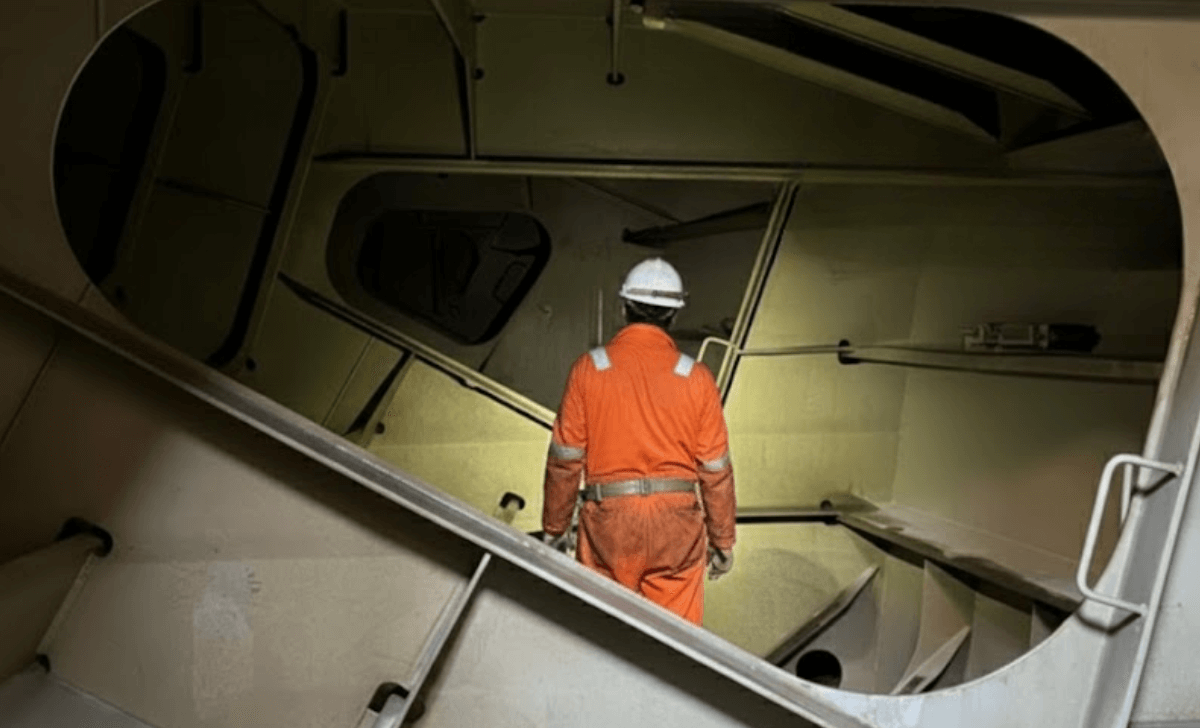
During self-discharging of a dry bulk cargo, the engine room rating on watch informed the cargo control room by portable radio that he was proceeding to the conveyor belt tunnels located beneath the cargo holds on his routine rounds. About 45 minutes later, the Chief Officer also went down to the tunnels to carry out his routine inspection and monitoring of the self-discharging system. When he reached the after end of the port side conveyor belt, he found the rating’s body between the conveyor belt roller and a supporting beam. The Chief Officer immediately activated the emergency conveyor belt stop system and called for help. Although the emergency services were quickly on the scene, the rating had already died of severe injuries. The rating had not been instructed to carry out any maintenance work on watch and the self-discharging machinery was operating normally during the incident. The reason for the rating becoming caught in the system is unknown. There were no witnesses. Lessons learnt The machinery at the end of the conveyor belt system was guarded by only a waist-high hand rail. Therefore, it was easy for a crew member to intentionally or unintentionally bypass the rail and come into contact with the moving belt or end roller. There was no safety stop in the immediate area; Ship owners have an obligation to ensure that every dangerous part of the ship’s work equipment is provided with guards or protection devices. These are to prevent access to danger zones or to halt movements of dangerous parts before the danger zones are reached; The rating worked alone during his six-hour watch. His only contact with the cargo control room was by portable radio. There were no procedures in place to regularly check on a lone worker, violating the recommendations in the Code of Safe Working Practices for Merchant Seamen (COSWP), which gives advice on communications for personnel entering and working alone in unmanned machinery spaces; A proper risk assessment of the area could have identified control measures such as enhanced guarding or CCTV coverage, which existed in other areas of the conveyor belt system, and extension of the safety stop arrangements; The rating had been given only verbal instructions on his duties during cargo discharge operations. There was no written job description for this work. A more defined job description might have deterred him from carrying out any extraneous work that could have placed him in danger. Disclaimer : The information on this website is for general purposes only. While efforts are made to ensure accuracy, we make no warranties of any kind regarding completeness, reliability, or suitability. Any reliance you place on such information is at your own risk. We are not liable for any loss or damage arising from the use of this website. Related Posts Real Life Incident: Collision Of Container Ship and General Cargo Ship Leads To Sinking And Fatalities Real Life Incident: Collision and Sinking of Small Craft in Shipping Lane Real Life Incident: Crew Saved but Ship Lost Real Life Incident: Pin Holes Create Pathway To Fatal Reckoning Related Posts Real Life Incident: Collision Of Container Ship and General Cargo Ship Leads To Sinking And Fatalities Real Life Incident: Collision and Sinking of Small Craft in Shipping Lane Real Life Incident: Crew Saved but Ship Lost Disclaimer : The information on this website is for general purposes only. While efforts are made to ensure accuracy, we make no warranties of any
Real Life Incident: Fatality In Ship’s Cargo Conveyor Belt System
Marine Insight
Read full article at Marine Insight →
Opens Marine Insight in a new tab