news Geopolitical riskOperational risk Splash247
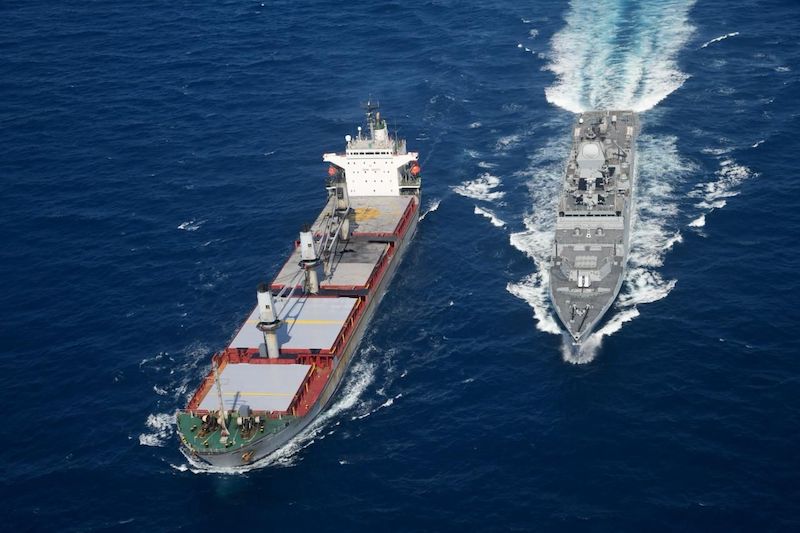
Wolfgang Lehmacher discusses the so-called weaponised interdependence at sea. Corridors have become battlefields as much as shortcuts. Eternity C (pictured) proved that in July 2025, when Houthi attacks in the southern Red Sea sent the Greek-operated, Liberian-flagged bulk carrier to the bottom, with crew dead, missing, and rescued from the water after hours adrift. The United Nations secretary-general issued a statement condemning the attacks on shipping in the Red Sea off the coast of Yemen. Shipowners saw how fast a routine lane can turn into a war zone. When canals cannot any longer be fully used, ships burn more fuel on longer hauls, freight rates spike and emissions follow. By mid-2024, the rerouting of ships around Africa had lifted global ship demand by 3%, specifically increasing container ship demand by 12%. A handful of canals, straits, and passes now carry such a large slice of world trade that any hit, from drones, drought, or simple congestion, ripples from Shanghai to Santos. Melting ice could make trans-Arctic passages via waters off Greenland and Russia a seasonal shortcut, bypassing the Suez and Panama Canals, but at the cost of environmental damage and new strategic competition in the High North. Fragmentation is reality Henry Farrell and Martha Finnemore coined the phrase “weaponised interdependence”: sit on a central node in finance, data, energy or shipping, and you can see the flows and, if needed, squeeze them. Sanctions, payment bans and port denials are all variations on the same theme: turn connectivity into a choke collar. I call this coercive connectivity. The twist in this story is what happens next. Under fire in the Red Sea, actors began seeking a way around the problem. Israeli and Gulf operators stitched together an overland bridge from Dubai through Saudi Arabia and Jordan to Haifa, offering a truck-borne bypass. However, the volume of cargo using the route was limited. Shippers are voting with their sourcing. Fast-fashion players like Asos and Boohoo have shifted more buying to Turkey, Morocco and closer-to-home suppliers rather than keep building on Asia cargoes threading a dangerous Red Sea or rounding the Cape at extra cost. Less production in far-flung places means fewer boxes exposed to chokepoints. Even if the volumes remain small, the reflexes are clear. At the darker end of the spectrum sits Russia’s shadow fleet, the off-grid alternative to the regulated system. Ageing tankers with murky ownership shut off AIS, conduct ship-to-ship transfers off Fujairah or in mid-ocean, and shuffle paperwork so sanctioned crude still finds its way despite price caps and financial bans. A similar grey network has served Venezuela’s embargoed barrels, with US seizures and treasury designations describing a growing shadow fleet that keeps exports moving around controls. It is risky and opaque, but together these fleets show how quickly parallel networks emerge when traditional routes are squeezed. Fragmentation is reality. One question is who can close a corridor, but, more important for global supply, who can keep cargo moving when the map is on fire? The actors with the edge are those who build for options: multiple routes, modes, sources, suppliers and financial pipes that can be swapped in at short notice. In an age of weaponised interdependence and coercive connectivity, the sharpest response is weaponised choice: the ability to walk away from any shortcut and still deliver on time. googletag.cmd.pus
When shipping corridors become battlefields

Splash247
Read full article at Splash247 →
Opens Splash247 in a new tab