pi_circular Dry bulk Safety & casualtyCargo risk London P&I Club
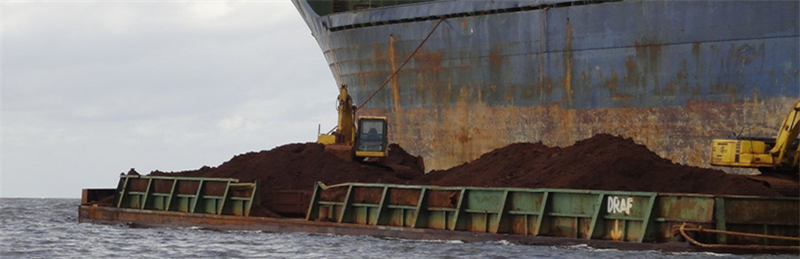
31 January 2011 TO ALL MEMBERS Dear Sirs Indonesia and the Philippines – Safe Carriage of Nickel Ore Cargoes Introduction As members may be aware, in October and November 2010, three vessels, the Jian Fu Star, Nasco Diamond and Hong Wei, sank during the carriage of nickel ore from Indonesia to China with the loss of forty four seafarers. The cause of the sinkings has not yet been definitively determined but nickel ore, like iron ore fines and many concentrates, is a cargo which may liquefy, if the moisture content of the cargo exceeds the Transportable Moisture Limit (TML) when loaded. Liquefaction of such a cargo can result in loss of stability which in turn can lead to a vessel capsizing. It is therefore very possible that all three vessels were lost as a result of cargo liquefaction. There have been a number of other recent reports of cargoes of nickel ore loaded in both Indonesia and the Philippines liquefying and causing loss of stability to the carrying vessel but fortunately not resulting in the loss of the vessel. In one such case the carrying vessel grounded causing extensive hull damage. Currently nickel ore is only loaded in four locations in the Philippines: Santa Cruz (Luzon), Surigao and Tubay (Mindanao) and Rio Tuba (Palawan Island). Liquefaction of some ore cargoes can be caused by the normal incidents of a sea voyage, for example the motion of the ship in the seaway or vibrations caused by the running of the main engine or other on-board machinery. The International Group informally raised its concerns about the loading and carriage of nickel ore from Indonesia and the Philippines, with the Indonesian and Philippine delegations that attended the 88 th session of the IMO Maritime Safety Committee (MSC) which was held between 24 November and 3 December 2010. Intercargo made an intervention at that session expressing its concerns with respect to the hazards and risks associated with the carriage of cargoes that can liquefy such as nickel ore. In addition Intercargo pointed out that some Charterers and Masters had been put under extreme pressure to accept Shippers’ declarations and testing reports without having been permitted the opportunity of independently verifying such declarations and reports. The Marshall Islands supported Intercargo’s intervention and the Indian delegation outlined the actions that the Indian authorities were taking to improve the safe carriage of iron ore fines cargoes loaded in India. Specific Concerns Associated with the Loading and Carriage of Nickel Ore The loading and carriage of nickel ore cargoes from both Indonesia and the Philippines has given rise to the specific concerns set out below. - 2 (a) Most mines are situated in remote locations and loading/port facilities are therefore non-existent or very limited and loading equipment and methods rudimentary. Cargo is stock-piled, uncovered, on the beach and accordingly totally exposed to the prevailing weather conditions. (b) The traditional practice has been to ship nickel ore cargoes in the dry season, from February to May/June when rainfall in past years was negligible. However in recent years anecdotal evidence suggests that the distinct demarcation between the wet and dry seasons has been substantially eroded and heavy rainfall is now experienced during the dry season. The stock-piles do not therefore benefit to the same extent from solardrying as in the past. (c) The mines are not easily accessible due to their remoteness and it is there
Indonesia and the Philippines – Safe Carriage of Nickel Ore Cargoes Introduction As members may be aware, in
London P&I Club
Read full article at London P&I Club →
Opens London P&I Club in a new tab