news Safety & casualtyOperational risk Marine Insight
On the approach to the pilotage area, the speed was gradually reduced and at 1942 the engine was test run on “slow astern” for approximately one minute. On the bridge were the Master, Mate, a deck cadet and a helmsman, the Second Engineer was in charge of the engine room. The Pilot boarded at 2000 when the vessel was 1.62 miles north of the breakwater light and the Master advised him that the gyro compass error was 2 degrees low, that the vessel did not have very good stern power and that the draught was 7.5M even keel. The Pilot acknowledged these facts, advised the Master that the vessel would berth stern first at No 5 berth, then ordered “slow ahead” and brought the ship onto the leads (2130). The Mate left the bridge to go to forward stations. The predicted time of high water was 2012, with a height of 3M above datum, providing a depth of 13M in the turning area inside the harbour breakwater. The Pilot’s intention was to swing the vessel to starboard using the forward tug, the transverse effect of the propeller going astern and the effect of the wind on the starboard side of the accommodation block, although he did not discuss these plans with the Master. At 2011, as the vessel entered the red sector of Round Hill leads, at a distance of 7.75 cables (1426M) off the breakwater, the pilot ordered “dead slow ahead” and altered course to starboard, to bring the ship on to fixed green Port Entry leads. When on the leads (2600), at 2014, he ordered “stop engines”. However, the effect of the wind on the starboard quarter caused the vessel to fall off to starboard and at 2015 he had to order “dead slow ahead, wheel hard to port” in order to maintain the correct heading. He ordered “stop engines” again after about half a minute. The south eastern end of Island Breakwater was abeam to starboard at 2018 when, with the bow entering the lee of the breakwater and the stern still exposed to the full force of the wind, the vessel veered to starboard and the Pilot again had to order “dead slow ahead, wheel hard to port”. At 2019 as the vessel passed the tanker berth, the Pilot, bearing in mind the Master’s advice about astern power, ordered “full astern”, rather than his usual slow or half astern. He expected to have to reduce power to “slow astern” after about 1 minute. At this point the vessel’s bow was 440M (just over 2_ ship’s lengths) from the dolphin of the bulk berth and 500M from McGaw Pier. A 40 tonnes bollard pull tug was made fast to the port shoulder at this time and the Pilot gave instructions for it to “push full”, to commence the swing. The Mate on the forecastle advised the Master that the bow was 300M from the wharf ahead and the Master passed this information to the Pilot, then instructed the Mate to keep him informed of the distance off the wharf. A 26 tonnes bollard pull tug was made fast on the port side abreast of No 5 hold at 2020, at which time the Mate reported the distance from the wharf ahead as being 100M and decreasing rapidly. The Pilot became concerned at the continued forward speed of the vessel, noting the lack of vibration and transverse effect normally experienced on going full astern on such vessels. He noted the engine revolution indicator was showing 55 rpm astern and at approximately 2020.5 asked the Master for more power but the Master said that the engine was on full astern. The Pilot repeated his instruction to the forward tug to “push full” on the port bow to clear McGaw Pier. He contemplated letting go the
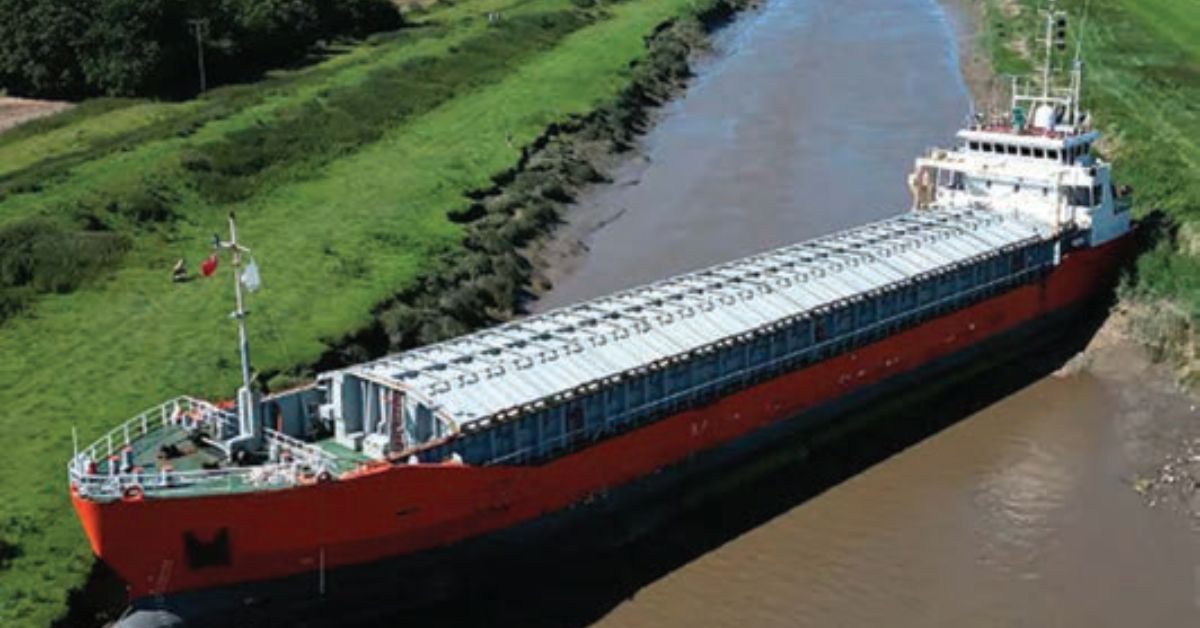
Real Life Incident: Berthing Damage

Marine Insight
Read full article at Marine Insight →
Opens Marine Insight in a new tab