market_report Tanker Geopolitical riskOperational risk Hellenic Shipping News
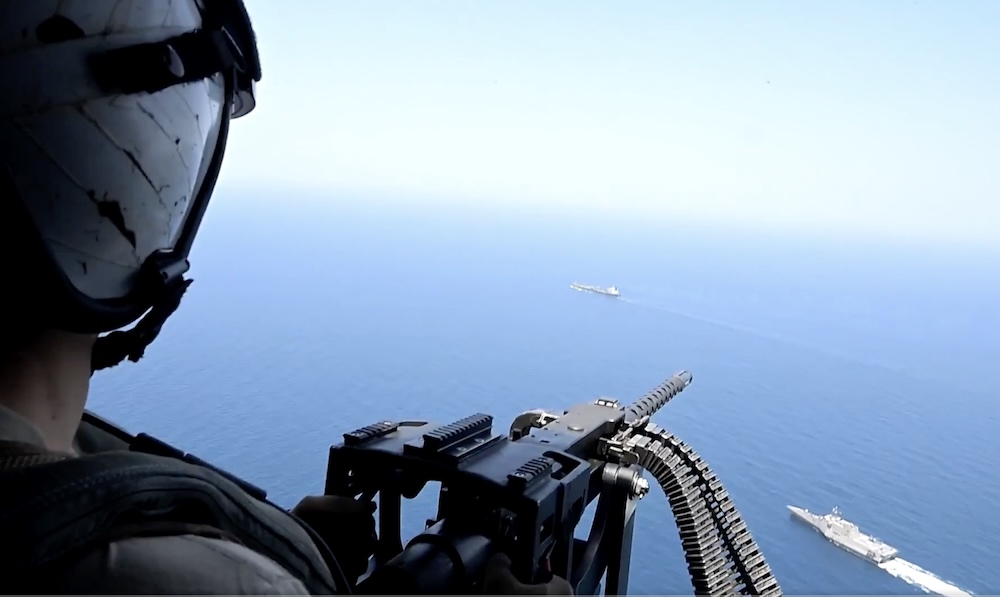
Strait of Hormuz Spotlight: Scenario Analysis in International Shipping News 10/03/2026 A sharp decline in tanker transits through the Strait of Hormuz and rising floating storage in the Gulf signal a shift toward risk-managed energy transport rather than normal market operations. Recent AIS data now indicates that commercial tanker traffic has effectively reached a near-standstill, with most vessels remaining anchored in the Gulf while operators assess security and insurance risks. Current indicators, including waypoint activity and vessel transit patterns, provide the basis for the disruption scenarios examined below. Scenario Matrix Scenario 1: De facto restriction of transit with rising floating storage Probability: very high ( already developing) The most immediate development appears to be a near-standstill in commercial tanker movements rather than a complete halt in traffic. Shipowners and charterers are assessing operational risks more carefully, and some departures are being delayed until freight economics justify the voyage. Floating storage is becoming part of this adjustment. Tankers that would normally depart shortly after loading are, in some cases, remaining offshore while operators evaluate routing options and market conditions. Several vessels have already been damaged or threatened by drone and missile activity in the region, reinforcing shipowners’ reluctance to transit the strait. Navigation through the corridor remains open, but activity may continue at reduced levels as shipping companies adapt to the prevailing security and insurance environment. At this stage, the situation reflects a commercial response to uncertainty rather than any formal restriction on transit. Scenario 2: A two-route export structure Probability: high If the disruption persists, producers increasingly rely on a combination of pipeline exports and selective maritime shipments. Pipeline infrastructure that bypasses the strait gains strategic importance, particularly in Saudi Arabia and the United Arab Emirates, where crude can reach ports outside the narrow passage. These routes provide partial relief but cannot handle the full volume normally exported from the Gulf. As a result, some tanker movements continνue, although typically under tighter scheduling and higher risk premiums. Scenario 3: Security-led stabilization of tanker movements Probability: medium–high If the slowdown begins to affect supply flows, maritime security operations in the region could expand. The United States Navy already maintains a significant presence in the Gulf and can monitor tanker traffic and support safe navigation if required. Such measures are typically intended to reinforce confidence in commercial shipping. They may include increased patrol activity, coordination with maritime authorities, and cooperation with industry stakeholders to ensure vessels can transit safely. Policy discussions have already begun around naval escort missions and temporary insurance backstops designed to restore confidence among shipowners. In practical terms, this could allow tanker movements to resume gradually, although under conditions where maritime security plays a more visible role in supporting the continuity of trade routes. Scenario 4: Market shock and temporary pricing power Probability: high The current disruption to tanker movements in the Gulf is already being reflected in oil market pricing, with AIS tracking showing virtually no commercial tanker transits during s
Strait of Hormuz Spotlight: Scenario Analysis
Hellenic Shipping News
Read full article at Hellenic Shipping News →
Opens Hellenic Shipping News in a new tab