news Decarbonization & energy Marine Insight
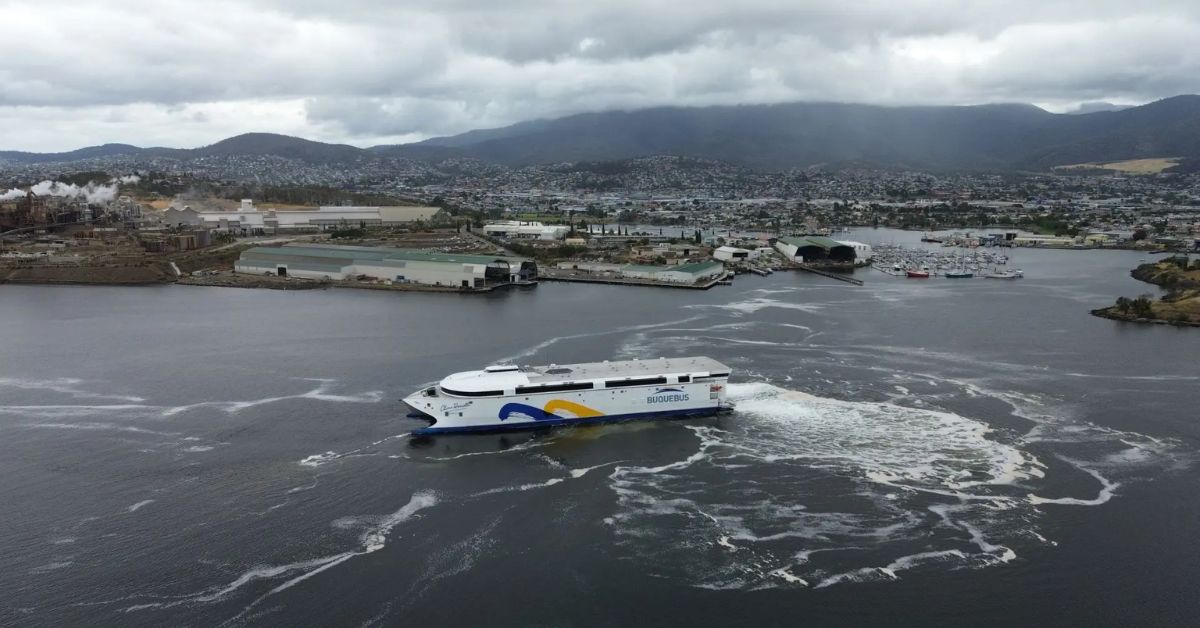
Image Credits: INCAT When the aluminium catamaran, Hull 096, entered the waters in Tasmania in 2025, it made history by becoming the world’s largest battery-electric ship. Named China Zorrilla, after the renowned Uruguayan actress, it is not just a ferry but a 130 m vessel which shows that zero-emissions shipping is now a reality. The largest battery-electric ship was built by Incat Tasmania for the South American company Buquebus. It will operate on the River Plate between Argentina and Uruguay. The vessel can accommodate 2100 people and 225 vehicles. It was not designed to be electric at first; it was reconfigured while it was in the mid-development stage. Originally, it was to be an LNG vessel, but the design was scrapped, and it was decided to make it entirely reliant on batteries. China Zorilla’s energy storage system was developed by Wartsila. Its battery capacity is over 40 megawatt-hours, which is four times larger than any maritime battery installation. The ship has 5,016 lithium-ion battery modules, weighing over 250 tonnes. This energy is what propels the Zorilla’s 8 electric waterjets, enabling the ferry to glide across the water without making a noise like conventional diesel engines. The vessel was launched in May 2025 at Incat’s Hobart Shipyard and underwent testing in Tasmanian waters. In December 2025, it completed its first e-motor trial when, for the first time, its waterjets were spun using just battery power, testing its electrical systems. When it enters service for Buquebus, China Zorilla is set to transform the travel experience of passengers between Buenos Aires and Montevideo. Apart from its green profile, it is silent and glides smoothly over water, meaning you can’t even make out if you’re moving, a contrast to the noisy ferries. Incat Tasmania has called Hull 096 “the new benchmark” for the industry. By showing that even the heaviest payloads can be carried using battery power, China Zorilla signals the beginning of the end for diesel ferries. The 260-ton ferry, which was developed in two years, is expected to reach a speed of over 25 knots. Its commercial success would mean a lot for the industry struggling to reduce its carbon footprint. You might also like to read- World’s First Solar Powered Inland Ship Using Solar Energy For Onboard Systems & Propulsion U.S Navy’s Latest 5 ft Robotic ‘Ghost Swimmer’ Shark World’s First 240-Ton Unmanned Ship Disclaimer : The information on this website is for general purposes only. While efforts are made to ensure accuracy, we make no warranties of any kind regarding completeness, reliability, or suitability. Any reliance you place on such information is at your own risk. We are not liable for any loss or damage arising from the use of this website. Related Posts Marine Transportation Of Plastic Pellets Or Nurdles Underwater Ship Hull Cleaning: Techniques, ROVs, & Cavitation Technology 20 Types of Shipping Containers: Designs, Dimensions and Uses Explained Top 20 Largest Cruise Ships In The World Related Posts Marine Transportation Of Plastic Pellets Or Nurdles Underwater Ship Hull Cleaning: Techniques, ROVs, & Cavitation Technology 20 Types of Shipping Containers: Designs, Dimensions and Uses Explained About Author Zahra is an SEO-Strategist & a Technical Writer with over 5 years of experience crafting top-tier content for the shipping world. From news, articles, ebooks, blogs and marketing pieces to industry white papers, she has written it all and now brings that expe
The World’s Largest Battery-Electric Ship
Marine Insight
Read full article at Marine Insight →
Opens Marine Insight in a new tab
