news Dry bulk Marine Insight
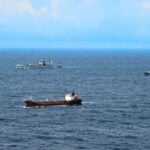
Image Credits: nzdf A Royal New Zealand Navy task group has completed a three-month deployment to monitor possible violations of United Nations sanctions against North Korea. The Anzac-class frigate HMNZS Te Mana covered about 180,000 square nautical miles during the patrols in the Yellow Sea and East China Sea. It monitored seven vessels of interest and sent 60 messages over maritime radio to deter sanctions evasion. This was the first time Te Mana had taken part in the UN Security Council sanctions-monitoring mission. Te Mana operated with the sustainment vessel HMNZS Aotearoa during the deployment. The two ships were part of a three-month mission in the Indo-Pacific, which included exercises, operations, engagements and other activities. The patrols focused on vessels suspected of helping North Korea get around UN sanctions. Some were suspected of carrying refined petroleum to North Korea, while others were suspected of exporting coal, iron ore and sand. The New Zealand Defence Force said these commodities are used to fund North Korea’s nuclear and ballistic missile programmes. North Korea uses a shadow fleet and ship-to-ship transfers to avoid sanctions, according to the New Zealand Defence Force. Ships involved can use different methods to hide what they are doing. These include switching off their Automatic Identification System , or AIS, and spoofing signals. Some vessels can also hide their identity by removing their flags or painting over their names. Another method is to change the ship’s apparent draft. Crews can move or adjust cargo so that a vessel appears to be heavily loaded or almost empty. Two SH-2G(I) Seasprite helicopters were used during the deployment. One was carried by each ship. The helicopters allowed the task group to look beyond the range of the ships and detect vessels over the horizon. Commander Tuijo Thompson, the commanding officer of Te Mana, said the mission gave the frigate a chance to use its sensors, systems and other
New Zealand Navy Frigate Tracks 7 Vessels Suspected Of Funding North Korea’s Nuclear And Missile Programmes
Marine Insight
Read full article at Marine Insight →
Opens Marine Insight in a new tab