news Tanker Markets & trade Hellenic Shipping News
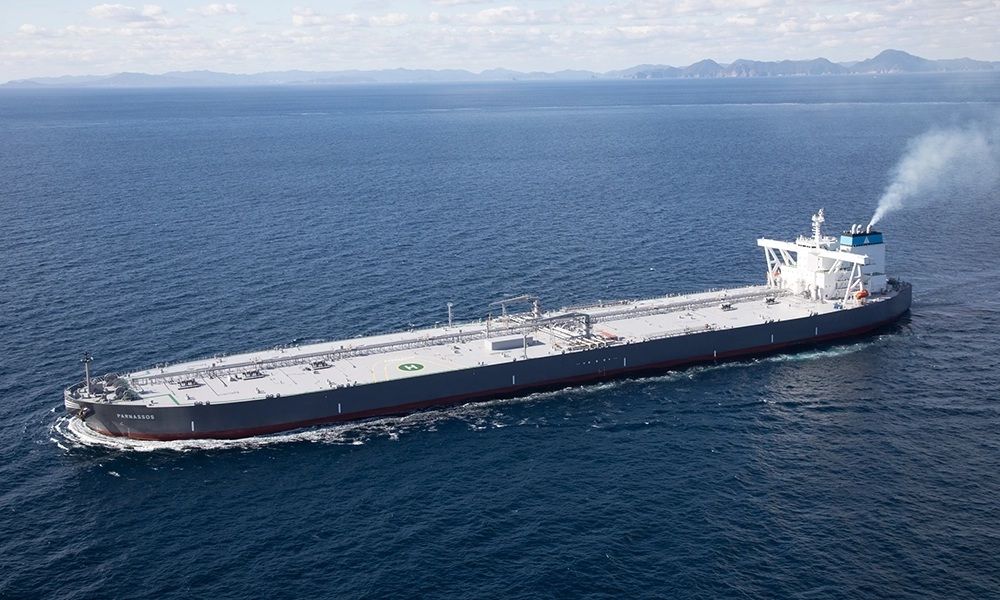
Rising ownership concentration: What it means for the VLCC market in International Shipping News 28/02/2026 Sinokor Merchant Marine has swiftly established itself as a major operator in the VLCC segment, acquiring more than 50 second-hand vessels while also adding substantial tonnage through time-charter arrangements. The expansion has reportedly been financed through a $2.5–3 billion exit from its container shipping business, with proceeds strategically redeployed into the crude tanker market. The South Korean owner has been paying a 10–15% premium over prevailing market levels to secure tonnage and aggressively lock in vessels from established players. However, by concentrating on vessels older than 10 years, Sinokor has been able to scale up its fleet significantly without a commensurate increase in capital deployment. After its recent acquisition spree, Sinokor Merchant Marine has expanded its fleet to 78 VLCCs, accounting for roughly 10% of the global non-sanctioned VLCC fleet. This surpasses the previous peak ownership concentration of around 8%, held by Frontline Ltd. in 2007. As the top 10 owners currently account for only around 48% of the non-sanctioned VLCC fleet, the market still seems structurally fragmented. The Herfindahl-Hirschman Index (HHI)—a standard measure of market concentration—also indicates a low level of consolidation. At 290, the VLCC segment’s HHI is well below the 1,500 threshold, typically used to classify a market as moderately concentrated, underscoring its unconcentrated nature. Assuming Sinokor Merchant Marine deploys its entire fleet in the spot market, its share of the VLCC spot segment would rise to around 20%. As several market reports indicate that the company’s fleet could expand to as many as 120 vessels by the end of 1Q26, its spot market share could exceed 30%—a level that is significant by any standard. Such a scale would represent a meaningful shift in market structure, positioning Sinokor as a potentially influential player in the VLCC spot market and enhancing its ability to shape freight dynamics going forward. Implications of the VLCC fleet concentration in a fundamentally strong market The fundamentals of the VLCC market are strong because of the oversupply in the oil market and sluggish fleet growth. Additionally, a shift in crude trade patterns amid the ongoing diversification of India’s oil imports away from Russia and easing US sanctions on Venezuelan crude has also boosted VLCC demand. The concentration of tonnage with a single owner in such a strong market will make the freight market more volatile, as the recent surge in VLCC earnings above $130,000pd confirms the same. The forward curve for TD3C has shifted significantly from end-3Q25 levels. The firmness in VLCC rates is also spilling over to the Suezmax market. Hence, as long as the market fundamentals are strong, we can expect high volatility in a concentrated market. During seasonal demand weakness In periods of seasonal or short-term demand softness, such as during refinery maintenance seasons, a concentrated VLCC market structure can help provide a firmer floor to freight rates. When demand weakens temporarily, spot rates typically come under pressure as more vessels compete for fewer cargoes. However, in a concentrated market, the presence of a dominant commercial operator can influence effective supply dynamics. If the market leader adjusts the availability of spot tonnage, the immediate oversupply in the spot market can
Rising ownership concentration: What it means for the VLCC market
Hellenic Shipping News
Read full article at Hellenic Shipping News →
Opens Hellenic Shipping News in a new tab