news TankerContainer Geopolitical riskMarkets & trade Hellenic Shipping News
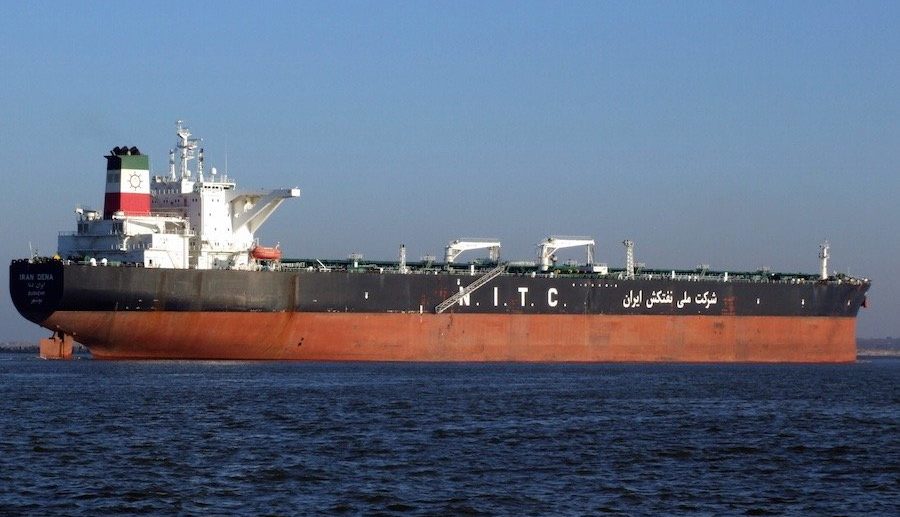
US shipping, supply chains pressured as Middle East conflict raises costs in International Shipping News 20/03/2026 The US-Iran conflict and subsequent closure of the Strait of Hormuz is putting upward pressure on both liquid tanker and container rates, increasing costs for shippers regardless of trade lane, while at the same time costs to move freight domestically via rail and truck are also rising amid changing federal and state regulations. All these topics will be top of mind for participants at this year’s International Petrochemical Conference (IPC) in San Antonio, Texas. US-IRAN CONFLICT Shipping through the Strait of Hormuz in the Arab Gulf has been effectively halted following attacks by US and Israel on Iran, which has caused crude oil prices to spike since about 20% of global crude oil transits the narrow waterway between Iraq and Iran. Initial impacts of the closure were isolated in the Middle East region, but soaring crude prices and geopolitical premiums have spread across the globe and are being felt in most segments. Bunker fuel prices have surged, more than doubling in the weeks since the crisis began, as shown in the following chart. Singapore, for example, saw very low sulphur fuel oil (VLSFO) prices at $1,120/tonne on 16 March, up from $490/tonne on 19 February. Whether through higher emergency fuel surcharges or geopolitical premiums, costs to move goods have surged. Market participants told ICIS that they have seen transatlantic styrene freight increased to $300/tonne from $80/tonne one month ago. War risk premiums are being added to ocean freight, especially anything destined for India, where rates have risen to $3,000-$3,500/FEU (40-foot equivalent unit), which in the polyvinyl chloride (PVC) market is about $130-$150/tonne, up from $50-$60/tonne. TANKER RATES SURGE The chemical tanker market has been challenged with ongoing structural inefficiencies further exacerbated by the closure of the Strait of Hormuz. These issues have prompted freight rates to surge, which is largely due to the limited amount of available space. Costs are further pressured by higher bunker fuel costs that have also contributed to the jump in rates. Owners and charterers are now both faced with higher logistics costs and no end in sight. Freight levels keep rising as owners struggle to rebalance their fleets to provide any support to the market. While space availability continues to shrink and bunker fuel rises, this in turn will limit any rebalancing of chemical cargoes in most trade lanes. These significant increases would most likely lead to a few different scenarios such as substantial rate increases, fewer port calls and potential supply chain disruptions for US manufacturers relying on specialty chemical trade flows. Uncertainty surrounding the conflict persists through much of the industry, weighing on confidence. As a result, most owners and charterers are taking a wait-and-see approach while looking for longer term solutions. ASIA-US CONTAINER RATES Rates for shipping containers from east Asia and China to the US have risen by $100-$300/FEU in the weeks since the US initiated its attack on Iran on 28 February. Only 2-3% of global container volumes transit the Strait of Hormuz, so the closure has had more of an impact on tanker shipping. Still, major container carriers implemented emergency operations that largely avoided the Middle East. Shipping market intelligence firm Linerlytica said carriers have scaled back rate hikes sched
US shipping, supply chains pressured as Middle East conflict raises costs
Hellenic Shipping News
Read full article at Hellenic Shipping News →
Opens Hellenic Shipping News in a new tab