news Geopolitical riskMarkets & trade Hellenic Shipping News
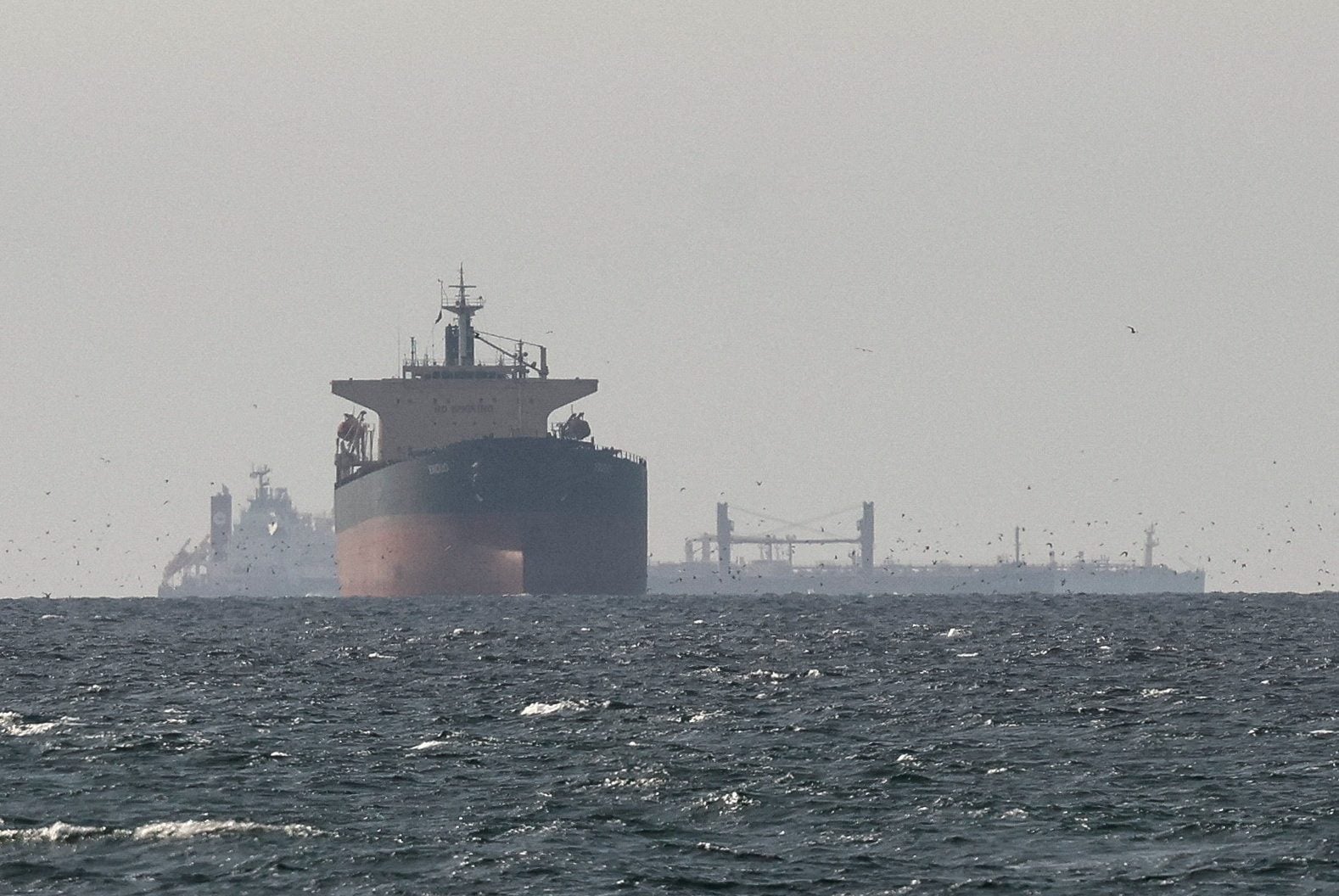
How escalation in Middle East spills over, impacts global economy in World Economy News 07/04/2026 With U.S.-Israel joint military strikes on Iran entering the fifth week with no clear path to resolution, the economic aftershocks are spreading far beyond the Middle East. What began as a geopolitical flashpoint has evolved into a systemic economic shock, reverberating through energy markets, industrial supply chains and critical maritime routes. As the conflict drags on, its spillover effects are increasingly testing the resilience of the fragile global economic recovery. GLOBAL OIL SHOCK As part of its response to U.S. and Israeli operations, Iran has restricted navigation through the Strait of Hormuz, targeting ships associated with the United States and Israel. The blockade of this vital global energy route has driven up oil and gas prices worldwide. On Monday, U.S. West Texas Intermediate crude for May delivery settled above 100 U.S. dollars for the first time since July 2022. Meanwhile, global benchmark Brent crude settled at 112.78 dollars a barrel, and is on track for a record monthly gain of over 50 percent in March. U.S. President Donald Trump warned Monday on Truth Social that if a deal to end the war isn’t reached “shortly” and the Strait of Hormuz is not immediately reopened, the United States would blow up and completely obliterate all of Iran’s electric generating plants, oil wells and Kharg Island. Later, The Wall Street Journal cited Trump administration officials as saying that Trump has told aides that he’s willing to end the U.S.-Israeli war with Iran even if the Strait of Hormuz remains largely closed. “A scenario in which the strait remains closed for an additional month would be consistent with oil prices rising towards 150 dollars a barrel and constraints on industrial consumers of energy supply,” Bruce Kasman, global head of economics at JP Morgan, was quoted as saying by British newspaper The Times. Describing the situation as “very severe,” International Energy Agency (IEA) executive director Fatih Birol said that he is in talks with member countries on releasing more stockpiled oil in response to the supply crisis triggered by the conflict. “A stock release will help to comfort the markets, but this is not the solution. It will only help to reduce the pain in the economy,” Birol said last week in Australia. Tensions in the Middle East also rattled global equity markets. Since the fighting began, major U.S. indices have dropped by more than 7 percent, while the pan-European STOXX 600 index has slid over 8 percent. Asian markets have also posted broad-based losses. According to a recent WTO report, sustained high energy prices could reduce the 2026 global GDP forecast by 0.3 percentage points and lower trade growth by 0.5 percentage points. “Sustained increases in energy prices could increase risks for global trade, with potential spillovers for food security and cost pressures on consumers and businesses,” WTO Director-General Ngozi Okonjo-Iweala said. In the United States, consumer sentiment has weakened noticeably, with the University of Michigan Consumer Sentiment Index dropping to a three-month low of 53.3, as war stokes inflation worries and clouds over the economic outlook. In Europe, which relies heavily on energy imports and is already dealing with the fallout from the Ukraine crisis, the shock is even more acute for both industries and households. Daan Struyven, co-Head of Global Commodities Research at
How escalation in Middle East spills over, impacts global economy
Hellenic Shipping News
Read full article at Hellenic Shipping News →
Opens Hellenic Shipping News in a new tab