news Operational riskCompliance & regulation Splash247
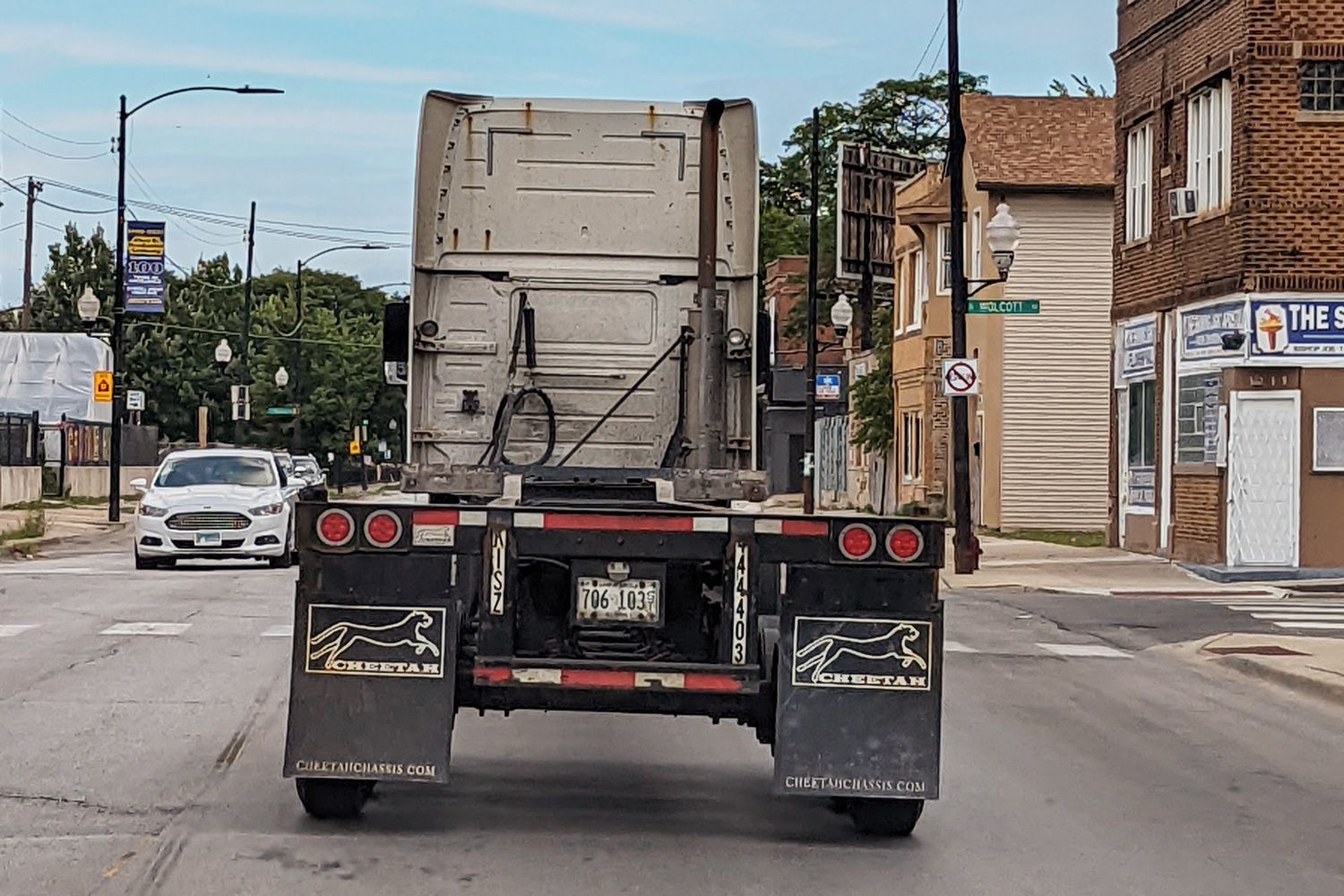
The next revolution in maritime training is not a new course — it is a new way of seeing, writes Matt Gilbert, founder and CEO of Yuni. 1956 was a remarkable year. John McCarthy coined the term ‘artificial intelligence’ at the Dartmouth Summer Research Project, proposing machines that could reason and solve problems. Benjamin Bloom introduced his taxonomy, a framework that underpins much of modern competency-based education. And Malcolm McLean’s Ideal X sailed from Newark to Houston, launching containerisation as a scaling breakthrough that transformed global trade. Three different fields shared a similar idea: organising environments and ideas into standardised logical structures enables scale. Artificial intelligence needed a way to represent reasoning. Education needed a way to structure learning. Shipping needed a standard unit to transform logistics. Each breakthrough created an architecture that brought meaning to ambiguity, allowing complexity to be managed, shared, and improved. Maritime education has felt these influences. STCW is one of the world’s largest competency frameworks, using outcome-based approaches that broadly correlate to Bloom’s hierarchy. Shore-based academic and professional qualifications share common foundations in assessment and certification. But education is commonly organised around endpoints – courses, certificates, compliance. These are necessary, but they are proxies. They are time-bound. They do not tell us how capability actually develops, how judgement improves, or how professionals perform when conditions change and pressure mounts. Training is often deterministic. Shipping is inherently probabilistic. Decisions must be taken with incomplete information: weather evolving, markets shifting, geopolitical tensions rising, human factors interacting, high-value assets exposed to complex and compounding risk. Competence is not just knowledge – it is the ability to interpret signals and act appropriately in context. This idea has deep roots. Baruch Spinoza argued that understanding comes from grasping relationships rather than isolated facts. Thomas Bayes provided a mathematical framework for updating belief as new evidence emerges – it is no coincidence that one of the world’s leading shipping programmes sits within Bayes Business School, a discipline built on decision-making under uncertainty. These are not abstract concerns. They describe the operating reality of every commercial maritime professional. Traditional learning structures struggle to capture that reality. Completion does not equal capability. Attendance does not equal judgement. Certification does not guarantee performance when conditions are nothing like the exam. Competency management systems exist – certificate records, revalidation flags, crewing matrices – but they are essentially sophisticated filing cabinets, not intelligence. They tell you what was attended and when it expires. These systems were built for compliance, and the industry needed them. But a system designed to flag an expiring certificate cannot tell you whether the person holding it is ready for the next role, the next route, or the next crisis. The architecture has hit its ceiling. Artificial intelligence has recently entered the conversation, often presented as a tutor layered onto existing content. These tools can support explanation and knowledge recall. But generating more content does not improve capability. What is needed is a shift from content-centric learning
What containerisation taught us about the future of maritime education

Splash247
Read full article at Splash247 →
Opens Splash247 in a new tab