regulation Compliance & regulationCargo risk Marine Insight
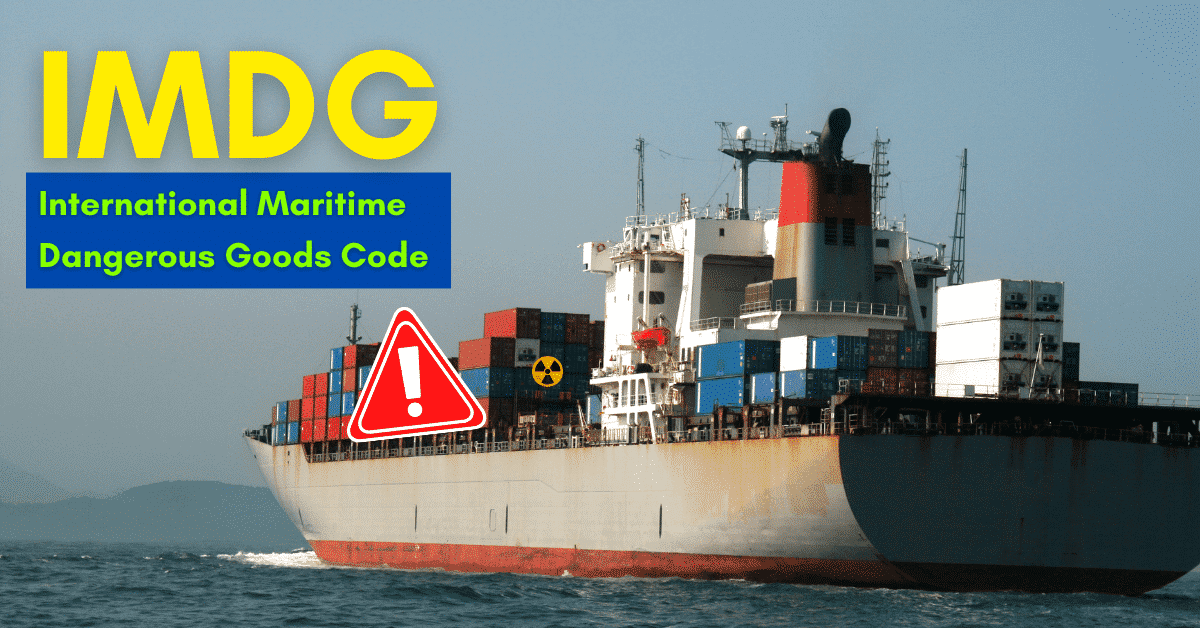
The International Maritime Dangerous Goods Code or IMDG Code was adopted in 1965 as per the SOLAS (International Convention For Safety Of Life at Sea) Convention of 1960 under the IMO. Also, some of the provisions of MARPOL are extended in the IMDG Code. IMDG Regulations are updated periodically. The 2018 edition came into effect in 2020. However, the 2020 codes were enacted on 1 June 2022, after a five-month delay caused by the COVID-19 pandemic. The objective of the IMDG Code is to ensure the safe transport of dangerous goods and prevent all types of marine pollution while allowing the free unrestricted movement of such goods. It also focuses on the preservation of the marine environment and the prevention of pollution. Voluntary compliance with the code began on 1 January 2019, and mandatory compliance with the code started on 1 January 2020. It was developed as a uniform international code for transporting dangerous goods by sea, including packing, container traffic, and stowage, with special emphasis on segregating incompatible substances. It is a two-volume set; another one-volume supplement emphasises fires and spillage emergencies. The IMDG code also ensures that goods transported through seaways are packaged safely. The dangerous goods code is uniform, meaning that it applies to all cargo-carrying ships worldwide. Dangerous goods are materials essential for manufacturing items like electronics, cars, batteries, and pharmaceuticals, for which there is tremendous demand and a large chunk of world trade. Related Reading: 8 Things Deck Officers Must Know While Handling Packaged IMDG Cargo What Is IMDG CODE? The Dangerous Goods Code was created per the recommendations of the United Nations Panel of Experts on the transportation of hazardous goods, along with the IMO (International Maritime Organisation). The UN presented this proposal as a report in 1956, after which the IMO IMDG Code was started to be drafted in 1961. Related Reading: 5 Instruments of IMO every Seafarer Should Know Since marine transportation has undergone a lot of development and changes, it becomes essential that the code also keeps up with the changes. This is why there have been constant amendments to the IMDG code. The amendments are proposed every two years, and the adoption of the amendments takes place after two years of the proposal by the concerned authorities. The amendments are presented in this manner: The countries that are members of the IMO present the required proposal. The UN’s expert panel then views and decides what proposals merit immediate attention in the upcoming amendment. Related Reading: Material Safety Data Sheet or MSDS Used On Ships Shipping Dangerous Cargo Shipping dangerous goods is a very tricky business. This is why, to avoid complications or problems while categorising the aspect and level of danger, there is a set of classifications for dangerous goods. There are nine clauses in which dangerous goods are classified. The dangerous goods labels and dangerous goods certificate for the cargo are issued as per the nine clauses, which are explained as follows: Classification 1 is for explosives. The same classification has six subdivisions for materials that pose a high explosive risk and those that pose a low explosive risk, like aerosols and fireworks. Classification 2 is for gases. This clause has three sub-categories about highly flammable gases that are not inflammable and gases that are neither flammable nor toxic. Classification
A Comprehensive Overview of IMDG Code for Shipping Dangerous Goods
Marine Insight
Read full article at Marine Insight →
Opens Marine Insight in a new tab