pi_circular Operational riskDecarbonization & energy Britannia P&I
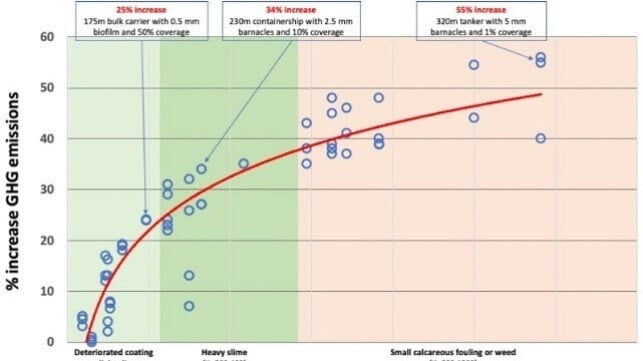
BRITANNIA LOSS PREVENTION APRIL 2025 HULL FOULING REFERS TO A CONDITION WHEN MARINE ORGANISMS SUCH AS BARNACLES, ALGAE, AND MUSSELS ATTACH THEMSELVES TO A SHIP’S UNDERWATER HULL SURFACE AREA. When operating in tropical or seasonal tropical waters the higher temperatures and sunlight provide ideal conditions for the rapid growth of marine organisms, particularly when the ship is stationary at anchorage for a longer period. Furthermore, during seasonal tropical periods, ocean currents transport nutrients from deeper waters to the surface in coastal areas, promoting the growth of photosynthetic organisms. UNDERSTANDING HULL FOULING HULL FOULING HAS BOTH DIRECT AND INDIRECT IMPACTS ON A SHIP’S PERFORMANCE. The most immediate effect is the increase in hull friction reducing the ship’s hydrodynamic efficiency, which leads to increased resistance as the ship moves through water, requiring more power and fuel to maintain speed. Higher fuel consumption reduces fuel efficiency and significantly increases operating costs for shipowners. Additionally, hull fouling can negatively impact speed performance, potentially leading to performance claims due to failure to meet charter party speed and consumption warranties. COSTLY CONSEQUENCES 2 | BRITANNIA LOSS PREVENTION | GUIDANCE This increased fuel use also has an environmental impact, leading to increased greenhouse gas emissions. This directly conflicts with international regulations aimed at reducing emissions in the maritime industry and increases risk of non-compliance with environmental regulations, such as those set by the International Maritime Organization (IMO). In warmer waters, hull fouling can exacerbate corrosion and localised damage on the hull, propeller or sea chests, particularly in a tropical marine climate where salinity is high. In some cases, ships may need in-water hull cleaning between scheduled drydocks, particularly if stationary in warm waters for extended periods. THE IMO BROADLY CONSIDERS ‘TROPICAL WATERS’ TO BE THE AREA BETWEEN THE TROPIC OF CANCER (APPROXIMATELY 23.5°N) AND THE TROPIC OF CAPRICORN (APPROXIMATELY 23.5°S) 1 . This definition is primarily used in general discussions of climate zones and their effects on maritime operations, whereas the International Convention on Load Lines 1966 provide a more refined definition that extends beyond strict geographical boundaries, additional regions based on specific criteria related to weather patterns and sea temperatures. ‘Seasonal tropical zones’ are areas adjacent to the tropical zone that experience tropical conditions during certain months of the year. FIGURE 1 MPA – chart of zones and seasonal areas 2 1 IMO Rules: Regulation 48 - Tropical Zone - https://www.imorules.com/GUID-7388A8D1-D2C7-47FF-9C1B-CEAE0A17025A.html 2 Singapore Statues Online - Annex II: Zones, Areas and Seasonal Period - https://sso.agc.gov.sg/SL/MSA1995-RG5?DocDate=20151228&ProvIds=SxIIDEFINING THE TROPICAL ZONES 3 | BRITANNIA LOSS PREVENTION | GUIDANCE HULL FOULING MAY OCCUR, DESPITE PROACTIVE PREVENTION EFFORTS, LEADING TO DISPUTES BETWEEN SHIPOWNERS AND CHARTERERS, PARTICULARLY REGARDING WHO BEARS THE COST OF HULL CLEANING. Charterparty agreements typically include protective clauses to address such situations, but these must be carefully negotiated to avoid misunderstandings on off-hire issues or underperformance claims. When a charterer issues a voyage instruction to trade within the permitted waters as outlined in the charterparty terms, shipo
Hull Fouling
Britannia P&I
Read full article at Britannia P&I →
Opens Britannia P&I in a new tab