market_report Markets & tradeOperational risk Splash247
Ship valuations are a source of huge divergence and frustration for many. While submitting a car owned by one of our editorial team for a valuation on multiple sites yields a variance of 12.9%, a simple exercise carried out Splash Extra – seeking the price of one famous ship – showed a near doubling – 25.66% – in terms of the divergence in prices from just two well-known ship price appraisal service providers. One of the most important data points for banks and financial institutions in shipping are prices provided by brokers, but they vary widely and face little or no regulation. Most issues and disparities in ship valuation are due to the relative illiquidity of the market and poor data quality. Most brokers claim that market indices are assessments, not actuals – the same goes for valuations as well. Common methodologies for evaluating ships include estimating the value of one type of vessel and then adjusting values for actual ships based on differences in age, specification, retrofits, and time since or until a special survey or drydocking, among other features. Most valuations assume that the ship is in class, of sound condition, etc which inevitably introduces errors into models. And since there is no global standard in valuations, it gives rise to differences in valuation outputs. Banks tend to accept appraisals from any broker, without requiring any qualifications Mark Williams, founder and managing director of Shipping Strategy, tells Splash Extra that ships are a relatively illiquid market. According to him, there are about 80,000 ocean-going ships and about 2-4% change hands each year which does not provide a great amount of data, and the greater the data volume the more accurate the analysis will be. This data set gets thinner when the total number of ships is divided into the many different types of ships there are like bulkers, tankers, boxships, and ferries. “Out of each different type, there are many different designs, sizes, and specifications from different shipyards. A capesize might be a fairly homogenous type, but smaller ships display a much greater variety of specifications. So, the population of sales is even smaller, making benchmarking much harder,” says Williams. Four-tier pricing He adds that the price a buyer is willing to pay for a ship value depends on current and expected freight market conditions which can vary considerably depending on who you ask, so valuations can vary from buyer to buyer or broker to broker. The whole concept of ship valuation used to be a lot simpler a decade ago. Back then, there was a two-tier market with eco-vessels commanding a premium over non-eco ships. Now, with a whole host of impending International Maritime Organization and European Union-led regulations, ship valuation is becoming a lot more sophisticated and nuanced. “In 2020, with the desulphurisation of fuel, this became a three-tier market, with scrubber-fitted vessels commanding another premium. With the implementation of CII, EEXI, and EU ETS, we are essentially looking at a four-tier market, with less carbon-intensive ships commanding a further premium depending on dual-fuel propulsion and EST retrofits,” Abhishek Pandey, global head of transportation finance at Standard Chartered, explains. Oracle forecasting So how do banks and financial institutions get their estimates as most often they are the ones providing loans or insurance for the vessels? As several experts from the industry revealed to Splash Extra, it
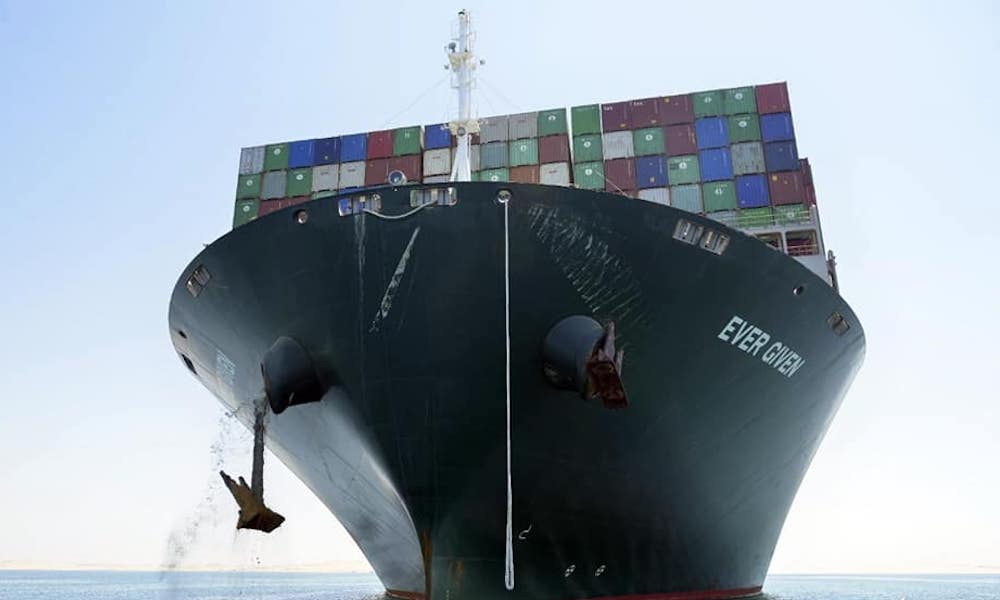
Just how much would you pay to buy the Ever Given?
Splash247
Read full article at Splash247 →
Opens Splash247 in a new tab