news Operational riskMarkets & trade Hellenic Shipping News
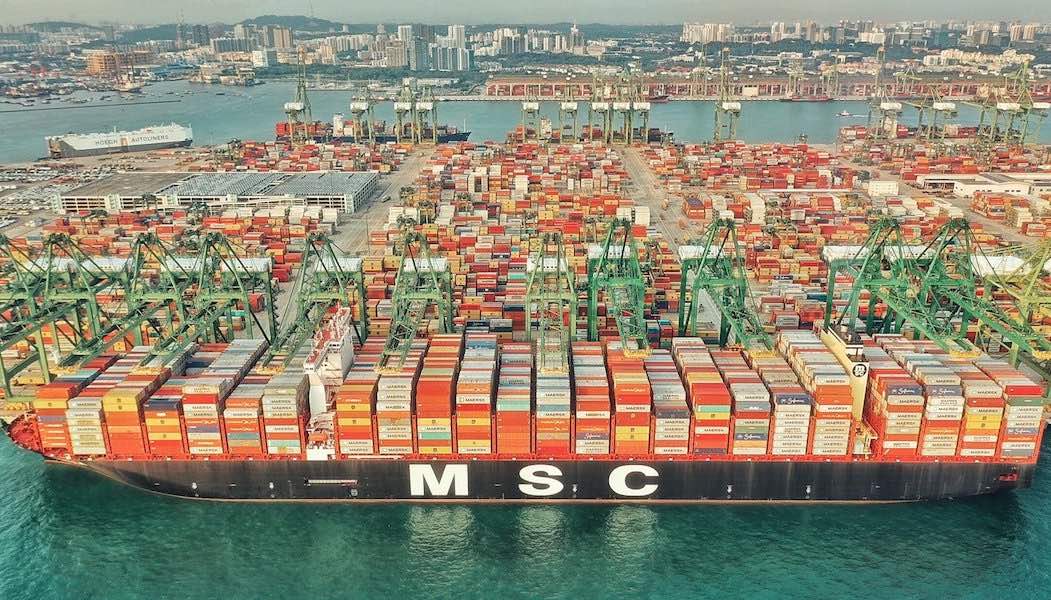
With competitors hot on its heels, how can Singapore’s port stay the course? in Port News 16/02/2026 About 15 years ago, Singapore slipped from the top of a global ranking it had dominated for years. The title of the world’s busiest container port went instead to Shanghai, marking a symbolic moment that reflected China’s meteoric rise as a manufacturing and trading powerhouse. Since then, Singapore has remained in second place – a position that creates a discomforting tension for a nation that has consistently strived to top global rankings in a slew of economic metrics, be it in connectivity, competitiveness or ease of doing business. Yet by many measures, the nation has not merely adjusted to that spot, but flourished in it. The port posted its strongest year on record in 2025, handling more containers, welcoming more ships and selling more marine fuel than ever before. In January, Singapore authorities reported that in 2025 there were a record 3.22 billion gross tonnes of vessel arrivals at the port here along with 44.66 million twenty-foot equivalent units (TEUs) of container throughput. A TEU refers to a standard-sized shipping container. That measure of vessel arrivals was up 3.5 per cent from 2024, while container throughput jumped 8.6 per cent from the previous year. The strong performance, however, is set against the backdrop of intense competition from China, which is home to six of the world’s top 10 busiest container ports. While Singapore sits in second spot, behind Shanghai’s over 50 million TEUs, Ningbo-Zhoushan, which lies across Hangzhou Bay from Shanghai, is hot on the Republic’s heels, reporting more than 43 million TEUs for 2025. Should Singapore be concerned about the rapid rise of China’s Ningbo-Zhoushan and will it pose a significant challenge to the country’s status as a leading maritime hub? WHY IT SHOULD MATTER TO THE AVERAGE SINGAPOREAN Given that about 90 per cent of the world’s trade is carried by sea, Singapore’s port serves as a “vital gateway” connecting the country seamlessly to the global marketplace, said a PSA Singapore spokesperson in response to CNA TODAY’s queries. The majority of the country’s international trade is handled by the Port of Singapore, which includes terminals at Tanjong Pagar, Keppel, Brani, Pasir Panjang, Sembawang, Jurong and the new Tuas Port. In terms of containers alone, the port handled around 370 million tonnes in 2025, compared with just about 2.1 million tonnes of air freight at Changi Airport in the same period, said Associate Professor Yap Wei Yim, head of the minor of maritime management at the Singapore University of Social Sciences (SUSS). The COVID-19 pandemic offered a stark reminder of Singapore’s dependence on ports: when flights were grounded, it was shipping that kept global supply chains intact, Assoc Prof Yap added. Beyond the quays and cranes, the port sustains a wider ecosystem – from shipyards and marine logistics firms to fuel suppliers, equipment manufacturers, marine insurance and legal services. The maritime sector contributes 7 per cent of Singapore’s gross domestic product (GDP) and supports over 170,000 jobs across some 5,000 companies. Last year, 35 maritime companies opened or expanded operations here, taking the total to more than 200 international shipping groups in Singapore. Collectively, key maritime companies contributed an estimated annual total business spending of around S$5 billion (US$3.96 billion) to Singapore’s economy, reflecting the d
With competitors hot on its heels, how can Singapore’s port stay the course?
Hellenic Shipping News
Read full article at Hellenic Shipping News →
Opens Hellenic Shipping News in a new tab