news Container Decarbonization & energyOperational risk Marine Insight
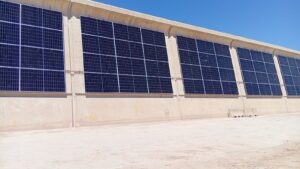
Image Credits: COSCO Shipping China’s largest solar-powered car carrier is China’s Yuan Hai Kou (often written as Yuanhai Kou), which combines fine engineering with a hybrid solar and LNG power system for low-carbon shipping. It is operated by Guangzhou Yuanhai Automobile Shipping Co., Ltd., a joint venture under China COSCO Shipping Corporation Limited. This Pure Car and Truck Carrier supports the industry’s decarbonization goals, in line with IMO Targets. The groundbreaking vessel was designed to meet the growing demand for vehicle shipments, especially to cater to the increasing Chinese automobile exports. It was constructed by Guangzhou Shipbuilding International (GSI), a subsidiary of the state-owned China State Shipbuilding Corporation. The world’s largest solar-powered car vessel completed its maiden voyage in July 2025 when it reached Piraeus Port, Greece, with 4000 chinese vehicles. The vessel has a maximum power output of 302.8 kilowatts, making it the biggest solar power system presently installed on a cargo ship. Dimensions and Cargo Capacity The Yuan Hai Kou has an overall length of 199.9 m and a beam of 38 m. It has a 10 m draft when it is fully loaded. The ship has a gross tonnage of 68,252 tons, a deadweight tonnage of 19,133 tonnes and a displacement of 39,069 tons. It can ship up to 7,000 standard vehicles (7,000 CEU) on a single voyage, thanks to its 12 vehicle docks, of which 8 are fixed, and 4 can be adjusted. The vessel can accommodate a wide range of cargo, including normal cars to new energy vehicles, heavy machinery and also massive buses. Solar and Propulsion Technology The main feature of this car carrier is its dual-energy approach that reduces the environmental impact of shipping. Its upper decks have more than 500 LONGi Sea-Shield series photovoltaic (PV) panels, especially designed to handle harsh weather and marine conditions, including salt spray, high humidity levels, powerful vibrations and other impacts. It produces around 410,000 kWh of clean electricity every year to run the ship’s lighting, communications, and internal equipment. Coming to propulsion, the ship depends on its main engine, which can run on a combination of Liquefied Natural Gas and traditional fuel oil. The use of solar power for onboard systems and LNG reduces the energy consumed by a whopping 20 %, thereby significantly decreasing carbon emissions, atleast by 24 % when compared to conventional ships. To be more specific, the ship’s solar panels alone save 111 tons of fuel and eliminate 345.9 tons of carbon emissions every year. On a round trip from China to Europe, the vessel lowers its carbon footprint by 2,100 tons, per media reports. Logistics and Safety Features Shipping thousands of battery-powered electric vehicles requires adherence to strict safety protocols since this cargo presents unique challenges. To manage the risks with lithium-ion batteries, the vessel was equipped with a smart software developed by COSCO Shipping. This advanced system allows the ship’s crew members to monitor the condition of individual vehicles, including their position in real-time and provides early fire-warning alerts to ensure that any thermal event is identified and contained as soon as possible. Impact of Yuan Hai Kou on International Trade The launch of this green vessel comes at a time of increasing vehicle exports and tightening maritime regulations. During its maiden voyage, the ship’s 90% of cargo was made of Chinese electric vehicles w
World’s Only Pure Car & Truck Carrier With The Largest Photovoltaic System

Marine Insight
Read full article at Marine Insight →
Opens Marine Insight in a new tab