news Decarbonization & energyMarkets & trade Splash247
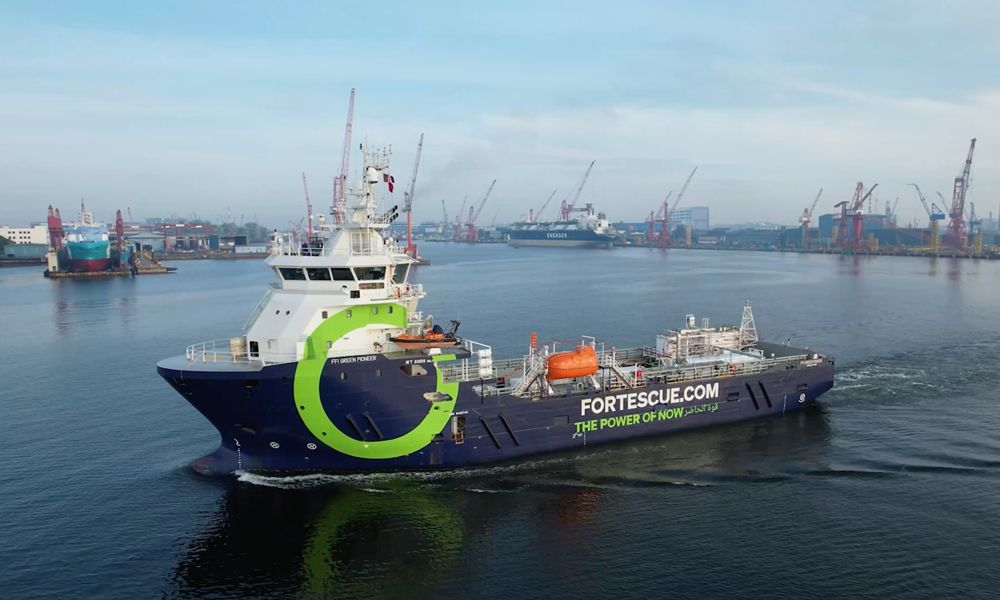
Researchers from the University of Oxford have published a study in Environmental Research: Infrastructure and Sustainability claiming that green ammonia could be used to fulfil the fuel demands of over 60% of global shipping by targeting just the top 10 regional fuel ports. The researchers looked at the production costs of ammonia which they said are similar to very low sulphur fuels, and concluded that the fuel could be a viable option to help decarbonise international shipping by 2050. Around $2trn will be needed to transition to a green ammonia fuel supply chain by 2050, primarily to finance supply infrastructure, according to the report. The study shows that the greatest investment need is in Australia, to supply the Asian markets, with large production clusters also predicted in Chile, California, Northwest Africa, and the southern Arabian peninsula. René Bañares-Alcántara, professor of chemical engineering at the University of Oxford, commented: “Shipping is one of the most challenging sectors to decarbonise because of the need for fuel with high energy density and the difficulty of coordinating different groups to produce, utilise and finance alternative green fuel supplies.” To guide investors, the team at the University of Oxford developed a modelling framework to create viable scenarios for how to establish a global green ammonia fuel supply chain. The framework combines a fuel demand model, future trade scenarios and a spatial optimisation model for green ammonia production, storage, and transport, to find the best locations to meet future demand for shipping fuel. Bañares-Alcántara added: “The implications of this work are striking. Under the proposed model, current dependence upon oil-producing nations would be replaced by a more regionalised industry; green ammonia will be produced near the equator in countries with abundant land and high solar potential then transported to regional centres of shipping fuel demand.” Ammonia as shipping’s ultimate alternative fuel has been gaining a lot of traction of late. The International Energy Agency (IEA) said in a recent update of its Net Zero by 2050 report that shipping will primarily turn to ammonia to decarbonise the sector. Belgian owner Exmar is expected to become the first shipowner in the world to take delivery of ammonia-powered newbuilds in the first half of 2026. Exmar has two 46,000 cu m LPG carriers contracted with Hyundai Mipo Dockyard, with these ships set to be able to operate on ammonia or LPG. Yara Clean Ammonia, part of Norwegian ammonia and fertilizer manufacturer Yara, and fellow liner operator North Sea Container Line have joined forces to deliver the world’s first containership that will use pure ammonia as fuel. From 2026 the ship named Yara Eyde will operate between Oslo, Brevik, Hamburg and Bremerhaven. The world’s first ammonia-capable vessel was in Dubai last month, albeit using diesel fuel. Australian miner Fortescue showcased its retrofit project in the waters of the Dubai Harbour Marina during the COP28 conference to shed attention on the creative approaches but also the regulatory changes required to decarbonise shipping. The 2010-built platform supply vessel FFI Green Pioneer (pictured) has been converted to run in ammonia dual-fuel mode following an 18-month project. Engine maker MAN Energy Solutions revealed recently it is on track to deliver its first ammonia engine later this year, with the full commercial release of the two-stroke engine set for
Oxford University study shows how green ammonia could be rolled out to shipping across the world
Splash247
Read full article at Splash247 →
Opens Splash247 in a new tab