news NAPA
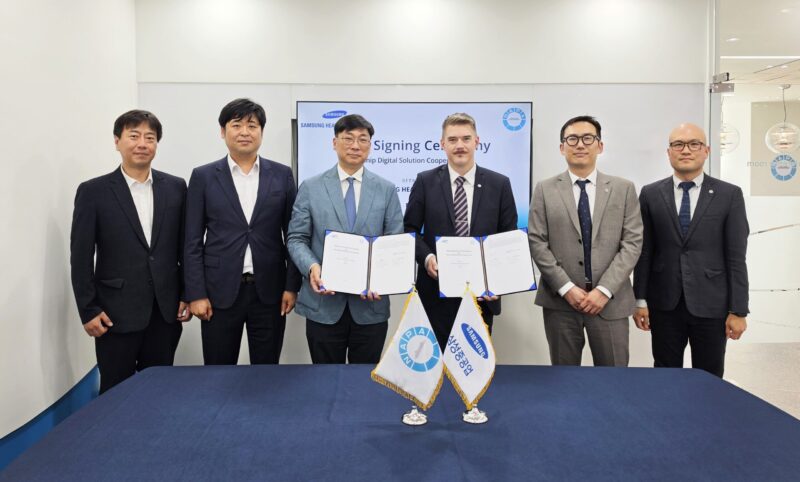
Integrating voyage optimization and performance analytics expertise in the early design stages as well as during operations will enable shipowners to better understand the potential of their decarbonization investment From left: SeungWoo Jung (Senior Electric Engineer, Samsung Heavy Industries), Kyungwon Bae (Group Manager, Samsung Heavy Industries), HyunJoe Kim (Executive Vice President, Samsung Heavy Industries), Pekka Pakkanen (Executive Vice President, Shipping Solutions, NAPA), Deok-Hoon Jang (Country Director, NAPA Korea), and Kyung-Ho Choi (Technical Director, NAPA Korea) / Photo by NAPA. NAPA VOYAGE OPTIMIZATION TALK TO AN EXPERT Geoje and Helsinki, 30 June 2026 – NAPA, the global provider of maritime software and data services, has signed a Memorandum of Understanding with Samsung Heavy Industries (SHI), one of the world’s leading shipbuilders and a pioneer in advanced, eco-efficient vessel, smart ship and autonomous technologies. The two companies plan to jointly conduct performance analysis based on actual operational data for vessels equipped with Samsung Heavy Industries’ wind-assisted propulsion device, ‘SAVER Wing.’ The SAVER Wing is a rigid two-element wing sail installed on the deck of a vessel. It is an eco-friendly propulsion system that generates additional thrust by utilizing wind energy. By applying the aerodynamic principles of aircraft wings, the system converts wind energy into forward thrust, thereby reducing the engine power required for propulsion and contributing to lower fuel consumption and carbon emissions. By modelling the performance of this vessel design in the specific voyage and weather conditions they will operate, based on actual operational data, SHI can offer shipowners more accurate efficiency projections that go beyond standard design-stage assumptions. This provides shipowners with earlier, tailored insight for better informed decarbonization planning and investments. The MoU a
NAPA and Samsung Heavy Industries partner to advance fuel-efficient ship design and operations
NAPA
Read full article at NAPA →
Opens NAPA in a new tab
