news Marine Insight
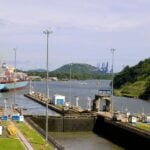
Image for representation purposes only Drought-like conditions and low rainfall have led to a further reduction in daily ship crossings through the Panama Canal, an important maritime trade gateway, especially for China and the United States. The Panama Canal Authority has cut daily crossings from 32 to just 29 as water levels have fallen a lot due to the prolonged dry season and no sign of rainfall in the region. The measures are necessary as the canal’s reservoirs also provide water to the residents of Panama, and long-term water conservation is the only way to maintain a balance between trade and daily necessities. The conditions have worsened due to El Niño, which is apparently the strongest one ever recorded in the last 40 years. The phenomenon develops over the Pacific Ocean and impacts the weather patterns across the globe, leading to increasing temperatures. Panama’s restrictions come at a time when shipping companies are already struggling to get their cargoes delivered, given the closure of the Strait of Hormuz to commercial shipping following the U.S-Iran war. The Red Sea and Persian Gulf are not safe either, as Houthis declared a naval blockade on Saudi Arabian ports and ships carrying the country’s cargo. In this situation, the Panama Canal transit cuts come as a major blow, which would impact global supply chains, lead to delays in cargo delivery, and increase operational costs and ultimately inflation. The 51-mile-long Panama Canal handles around 5% of the total maritime trade and is the fastest route between the Atlantic and the Pacific Oceans. The Panama Canal has not reduced ship crossings, but also restricted the maximum draft of ships from 15.2 to 14.6 m. Each cargo ship crossing the canal needs 200 million litres of water, which it then discharges into the reservoirs. A similar situation occurred in 2023, when ship crossings had to be cut from 38 to just 22 as water levels dropped. The current head of the canal authority, Espino de Marotta, has
Panama Canal Squeezes Daily Capacity To 29 Ships, Threatening Global Supply Chains
Marine Insight
Read full article at Marine Insight →
Opens Marine Insight in a new tab