market_report Tanker Markets & tradeGeopolitical risk Splash247
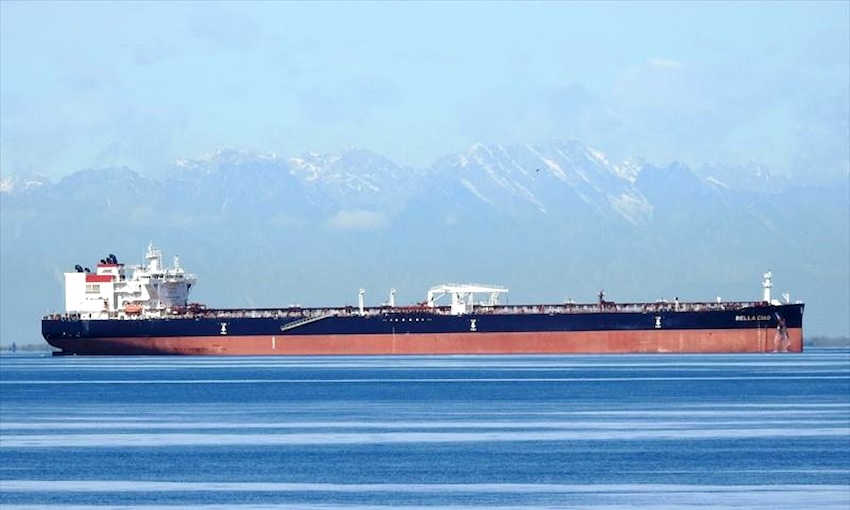
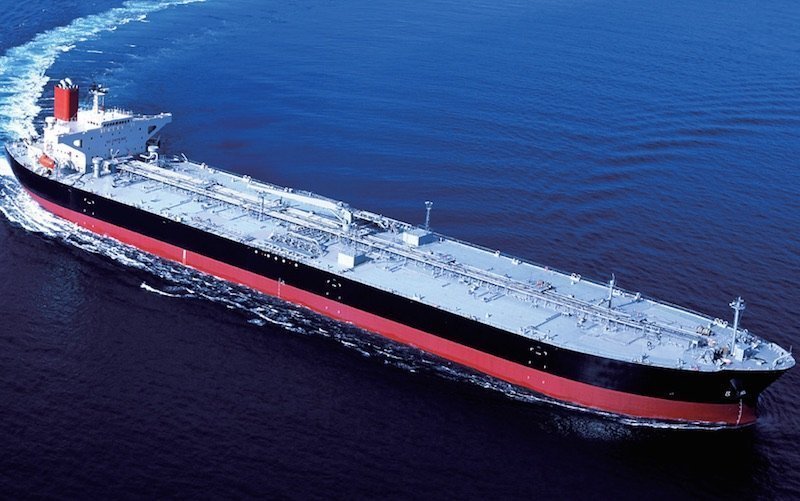
As US president Donald Trump works to bring the Ukraine war to an end, oil markets have been struggling with increased levels of geopolitical risk to attach to oil prices and trade. Amid all the political noise, India has continued to buy Russian oil and indeed has deepened its relations with Moscow by agreeing to co-invest in Arctic and Russian Far East oil exploration and production. Russia’s oil shipments to India fell by 20% in July to 1.4m barrels per day as India switched to West African and Middle Eastern oil, but the effect appears to have been temporary with Indian buyers returning to buying Russian oil in August. Underlying the political noise, the fundamental truth of the global oil market is that it is oversupplied by as much as 2m barrels per day. This has kept oil prices below $70 per barrel. China and other states have been taking advantage of low prices to build their strategic reserves. Refiners have been taking advantage of low prices to increase run rates at the higher margins that cheaper input prices offer. So even as global oil demand grows only slightly, global oil markets are being flooded with surplus products. In the crude oil tanker markets, this has translated into extra spot market activity and higher earnings. China has added demand for two extra VLCCs per week through its SPR purchases. This has pushed up the time charter equivalent earnings on West Africa to China VLCC earnings by 57% in the 30 days to August 22, to $49,608, with $50,000 levels surely to be crossed in the coming days. VLCC TCE earnings on the Middle East to China voyage rose 72% over the same dates to $51,501, while gross income from the US to China voyage worked out at $40,894 on August 22, up 13% over 30 days. Suezmax earnings have performed even better as the capacity utilisation of the smaller fleet ramps up on demand for South American grades of oil. On the voyage from West Africa to Northwest Europe, rates rose 63% over 30 days to August 22, reaching to a champagne-opening $50,655 per day. On the transatlantic voyage from Guyana to the Netherlands, earnings rose 72% to a meaty $48,458 while cross-Med earnings of $48,689 per day, up 17% over 30 days to August 22, will have owners smiling over their holiday reading. Aframax average earnings in August to date are $33,295, their best reading since April, led by a 64% increase in TCEs on the US Gulf to ARA voyage, rated at $37,836 on August 22. In the North Sea, rates for discharge in the UK rose 137% to a stirring $73,688 per day while rates to Germany were up 120% to $53,884. The Baltic Dirty Tanker Index has reached an average of 1,006 points so far in August, its first four-figure month since April’s average of 1,126. Firm demand has spread to the oil products tanker markets. On the Middle East to Japan voyage, LR2 TCEs rose 15% to $31,308 over 30 days to August 22 while in the reverse direction from the Middle East to Northwest Europe they rose 16% to $35,376, though they peaked at $39,932 on August 7. LR1s on the Middle East to Japan voyage enjoyed an equivalent 15% uplift in rates over the same dates to reach $24,687, while on the Middle East to Europe voyage they were up 11% at $26,990. For the smaller MR products tankers, the Atlantic freight market was revved up by the driving season and rising US refinery output. Daily TCEs from the US Gulf to Europe ballooned by 164% to reach a stellar $28,698 per day on August 22, slipping a tad from $27,120 achieved two days earlier. On the
Oil surplus drives tanker demand
Splash247
Read full article at Splash247 →
Opens Splash247 in a new tab