market_report Markets & tradeOperational risk Hellenic Shipping News
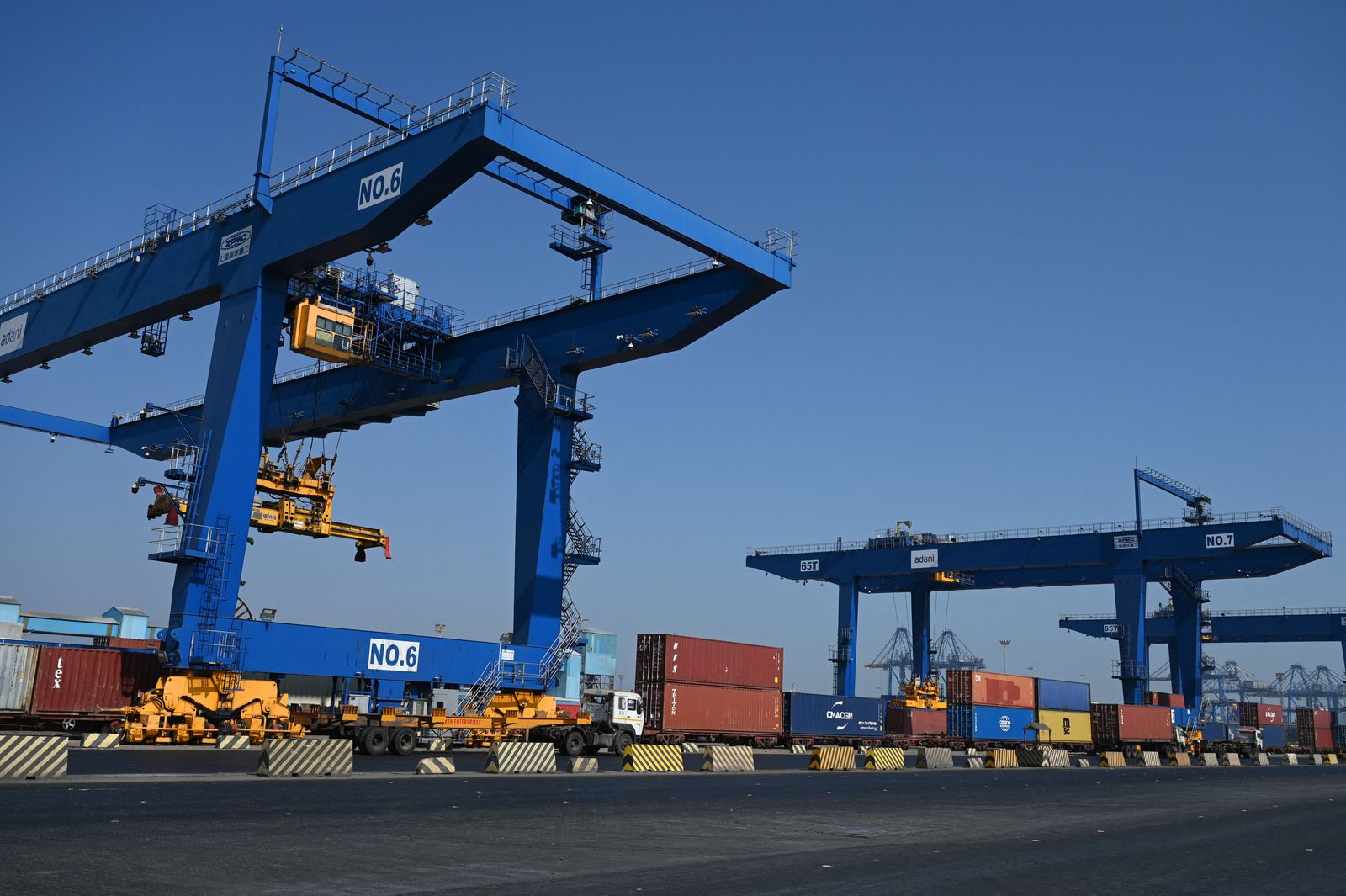
US marine terminals: The past, present and future in International Shipping News 23/02/2026 As global commerce continues to evolve, the efficiency and capacity of US marine terminals are increasingly vital to supporting international trade and economic growth. This report traces the development of American ports from their initial embrace of containerisation to the complex challenges and opportunities they face today, highlighting the influence of technology, labour practices, and operational strategies on their productivity and future prospects. The development of US port containerised facilities After the initiation of containerised ocean transportation in 1956 by Malcolm McLean and his company Sea-Land Service, ports in the US needed to develop facilities that could support this new mode of ocean transportation. Containerised movement of ocean cargo is 25 to 30 times as productive as the pre-existing breakbulk system. In 1956, one labour gang of stevedores could process about 20 to 25 tons of cargo per hour. With containerisation operations, it became 500 to 800 tonnes per hour with one crane, a gang and associated equipment. Today, basically all the US merchandise imports and exports move in containers and are processed through about 20 ports, which handled approximately 56 million containers in 2024. Stevedore labour Stevedore/port labour is an integral part of all facilities, not only because they are required for the facility to function, but also because they have a critical influence on the future of all port facilities in the US. Almost all containers that move into or out of the US are handled by members of 2 unions: The ILA (International Longshoremen’s Association) covers the US East and Gulf coasts, and the ILWU (International Longshore and Warehouse Union) covers the West Coast. US marine terminals: The past, present and future To understand the attitude labour brings to the operation of US port facilities, it is helpful to understand what happened to stevedore labour when ocean transportation moved from breakbulk to containerised operations. In the port of New York & New Jersey in 1955, the ILA had approximately 40,000 members in breakbulk operations. Today, while moving at least 3 times as much cargo, there are about 6,000 members. The workforce is 85% smaller but handles 3 times as much cargo. Containerisation devastated the stevedore union workforce in the US. Given that both unions believe that technology and automation will eliminate jobs and their interest in protecting high salaries, both union contracts contain language that restricts or bans the use of automation technology. These restrictions on automation, while not a significant issue now, will eventually become especially important when US ports need to add capacity. Current terminal operations The US marine terminals have several characteristics that are different from those in the rest of the world. US port operations are unique in how chassis are handled. The US is the only market in the world where carriers (and now intermodal equipment providers) supply chassis. In the rest of the world, the trucker supplies the chassis. The US is moving toward the trucker chassis model, but chassis still complicate the operation of US ports. Most ports in the world operate on a 24/7 basis. US ports do not, in part, because of the high cost of labour. US port terminals generally operate 5 days per week, with occasional Saturday operations, for a total of 70 to 90 hours
US marine terminals: The past, present and future
Hellenic Shipping News
Read full article at Hellenic Shipping News →
Opens Hellenic Shipping News in a new tab