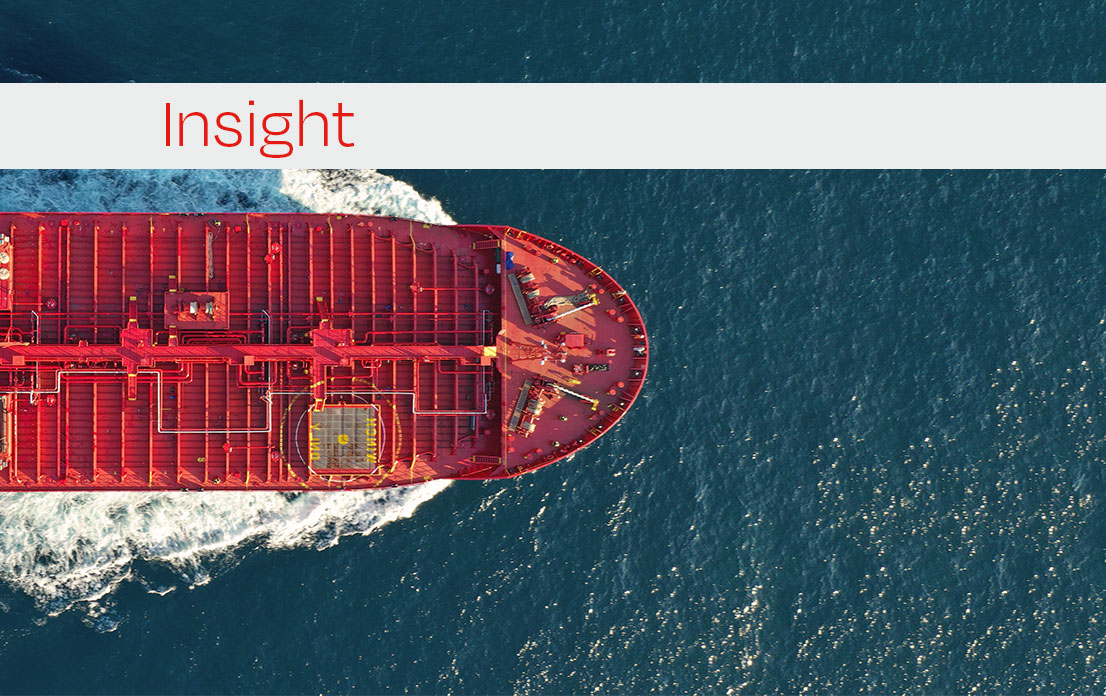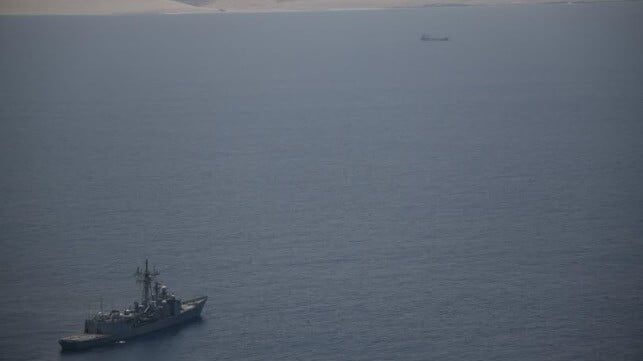
Product Tanker Hijacked off Yemen, Then Diverted to Somalia
In the continuing recent upsurge in Somali-associated piracy, the Togo-flagged oil products tanker Eureka (IMO 1022823) has been boarded off Yemen’s...

24 maritime news articles about IMO

In the continuing recent upsurge in Somali-associated piracy, the Togo-flagged oil products tanker Eureka (IMO 1022823) has been boarded off Yemen’s...


The Marine Environment Protection Committee of the IMO concluded its 84th session with a commitment to rebuild consensus on global shipping emissions.Nearly 100 delegations took the floor this week to voice their views on the adoption of “mid…
Home Publications Articles Shipowners Liability Limits in Brazil Shipowners Liability Limits in Brazil Brazil applies strict domestic maritime liability laws rather than international limits, leaving shipowners, especially for pollution claims, exposed to uncapped risk, despite possible future reform for oil tankers un

Navigating in conditions of restricted visibility presents significant challenges in maritime operations. All ships must abide by COLREGS 72, as well as the requirements of the coastal state, the port state, and relevant IMO instruments.

This edition of Risk Watch cover best practices and risks in onboard blending and commingling of liquid bulk cargoes, ballast water management updates, enhancing emergency response at sea with automated external defibrillators and developments in legal frameworks surrounding charterparty disputes. This edition of Risk

WRC 2007 The Wreck Removal Convention was adopted at an International Maritime Organisation Diplomatic Conference in Nairobi in 2007. The Convention entered into force on 14 April 2015.

Maintaining an effective anchor watch is critical to preventing collisions, groundings, and other avoidable incidents. This article outlines key STCW and IMO requirements for continuous monitoring, proper lookout, environmental assessment, and engine readiness—reinforcing that professional vigilance and adherence to r

Introduction The EU Passenger Liability Regulation 392/2009 (PLR) entered into force on 31 December 2012 in all States that are members of the European Union or the European Economic Area [r eferences to the EU should be taken to include the EEA ]. The Regulation is based upon the Athens Convention 2002 and sets out a

With stringent decarbonisation regulations already in force within the EU/EEA, the European authorities are now focusing on greenhouse gas (GHG) emissions from ships sailing in EU/EEA waters and on the GHG intensity of the fuels burnt on board. Once the measures of the 2023 IMO Strategy on Reduction of GHG Emissions f
From 1 January 2026, the shipping industry will be required to report all containers lost at sea. The new regulations come into effect following IMO amendments to the International Convention for the Safety of Life at Sea (SOLAS).
The revision of the International Grain Code was adopted at the IMO Maritime Safety Committee in 2024 and will come into effect on 1 January 2026. The main purpose of the amendment is to formally incorporate into the code the cargo handling method of “specially suitable compartment, partly filled in way of the hatch o
Despite detailed IMO recommendations setting out safety precautions for fumigating vessels’ cargo holds, casualty investigations continue to reveal critical gaps in training, gas monitoring, and risk awareness - leaving crews exposed to life-threatening hazards during in-transit…
The IMO agrees to designate a new emission control area (ECA) in the North-East Atlantic Ocean, connecting existing ECAs in the Baltic Sea, North Sea, and English Channel ECAs to those recently established in the Mediterranean Sea, Norwegian Sea, and Canadian Arctic waters.
The 'MARPOL delivered sample' size has increased from 400ml to 600ml and must now also be available for checking the flashpoint requirements under SOLAS Regulation II-2/4. 2.
Although the shipping sector is now heavily focused on reducing greenhouse gas emissions, IMO is also working to improve air quality by increasing the number of MARPOL designated sulphur emission control areas. And - don’t forget that many regions, states, and ports enforce strict sulphur emission limits to protect th
The revised IMO Biofouling Guidelines came into force in 2023 and provide updated guidance on how to prevent the spread of marine invasive species. Here are the key recommendations.
Today, 30 September 2021, we join with IMO and the global maritime community to commemorate the annual World Maritime Day, with a focus on this year's theme: "Seafarers: At the core of shipping's future".
One of key highlights of the 103rd session of IMO’s Maritime Safety Committee (MSC 103) was the completion of the MSC regulatory scoping study for maritime autonomous surface ships (MASS). The IMO Legal and Facilitation Committees regulatory working groups, that deal with the financial and liability issues, are still
Cefor represents marine insurers in the Nordic countries. The association serves its members by promoting quality marine insurance and knowledge sharing and a considerable part of Cefor’s activities take place within its nine member forums.
Many predictions were made in the run up to the imposition of the MARPOL 2020 sulphur cap, none of which was that the transition to Very Low Sulphur Fuel Oil (VLSFO) would be smooth sailing. From Gard’s experience, the transition has been smoother than many predicted but not without challenges.
On this [Day of the Seafarer](http://www.imo.org/en/About/Events/dayoftheseafarer/Pages/Day-of-the-Seafarer-2020.aspx#:~:text=%E2%80%8BThis%20year%2C%20the%20annual,th%20anniversary%20on%2025%20June), we stand with the IMO to call for universal designation of seafarers as key…
While the IMO has given shipowners and operators until 2021 to incorporate cyber risk into ships’ safety management systems, cyber criminals are already at work. Crises like the COVID-19 pandemic often lead malicious cyber actors to take advantage through various malicious methods.
2019 saw the implementation of regulations related to crew, lifesaving, fire safety, environment, cargo, and certification. This year too there will be numerous regulatory changes and for the first time the industry will see a global regulation coming into force that is identified by only the year suffixing the letter
There are concerns associated with both of the two most popular options to comply with IMO 2020; use of compliant fuels and SOx Exhaust Gas Cleaning Systems (EGCS), often referred to as scrubbers. However, what is important is that after an incident has occurred, the maritime industry learns and prevents similar cases