news Container Container News
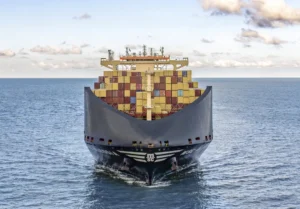
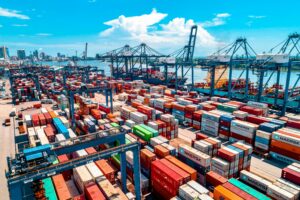
While Asia remains the undisputed engine of global manufacturing, port throughput, and shipbuilding , it is European carriers that control the actual vessels moving those goods. Consequently, Europe dominates the global container fleet capacity , holding over 55% of the market with only a handful of mega-operators. This concentration of vessel ownership reveals a stark reality. Specifically, while the physical goods originate in the East, the logistical strings are largely pulled from the West. According to the latest tracking data from Alphaliner , analyzing these operators reveals how container fleet capacity is geographically distributed. Therefore, we can easily highlight the key players driving maritime trade across each continent. Europe: The Epicenter of Global Capacity Europe commands a staggering 55.3% of the entire global market, despite having only five carriers represented in the top 30. This represents a massive concentration of power. Indeed, this footprint totals over 18.9 million TEUs (Twenty-Foot Equivalent Units) in fleet capacity. European carriers have long championed the strategy of massive scale and global alliances. As a result, they secure their position at the pinnacle of ocean freight. Mediterranean Shipping Company (MSC): Headquartered in Switzerland, MSC stands as the undisputed titan of the seas. Specifically, the carrier controls a massive 7,351,759 TEUs . This translates to a commanding 21.5% share of the total market. Thus, MSC continues to aggressively expand its fleet. Maersk: The Danish shipping pioneer maintains its position as a cornerstone of global trade. Currently, it controls 13.8% of global capacity with over 4.7 million TEUs . CMA CGM Group: Representing France, this carrier holds a 12.8% global market share. Consequently, it solidifies its presence on major east-west corridors with 4,375,063 TEUs . Hapag-Lloyd: Operating out of Germany, Hapag-Lloyd secures 7.0% of the global market with 2,401,732 TEUs . In addition, it ser
Europe dominates global container fleet capacity

Container News
Read full article at Container News →
Opens Container News in a new tab