news LNG / LPG Compliance & regulationDecarbonization & energy Hellenic Shipping News
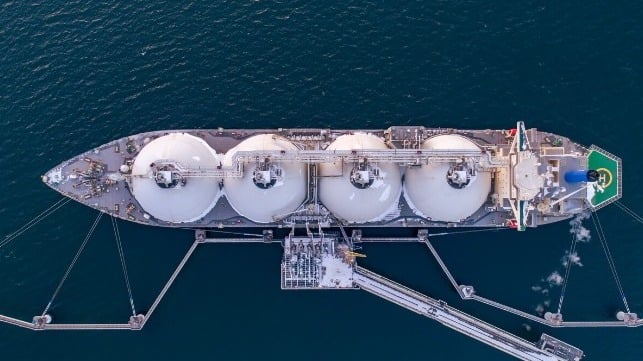
Understanding the regulatory status of LNG carriers using boil-off gas in International Shipping News,Shipping: Emission Possible 04/02/2026 For operators of liquefied natural gas (LNG) carriers that utilize their own cargo as fuel, the regulatory framework for emissions reporting and trading has lacked clarity. DNV looks at recent clarifications and highlights open questions the industry should address. The European Union’s MRV, EU ETS and FuelEU Maritime regulations aim to create a level playing field across the maritime industry in terms of emission reductions and emission trading. The stipulations related to LNG as ship fuel focus on vessels bunkering LNG, whereas LNG carriers using their own cargo as fuel are addressed only marginally. A September 2025 update to the EU guidanne doocument on FuelEU Maritime has clarified certain aspects but some open questions remain. Unique challenges for LNG carriers “LNG carriers operating on the boil-off gas (BoG) that inevitably builds up in their cargo tanks face unique questions regarding the calculation of their greenhouse gas emissions: when more boil-off gas is generated than the ship needs for propulsion and power generation, it must be dealt with for safety reasons,” explains Martin Cartwright, Global Business Director for Gas Carriers & FSRUs at DNV. “Whatever BoG management option is chosen, it will increase the ship’s emissions. LNG carriers equipped with on-board reliquefaction equipment need extra fuel for this process. Vessels without such equipment must burn the excess gas in their gas combustion unit without benefiting from the energy content. This incinerated gas is considered as fuel gas burnt, and the resulting emissions are subject to emission charges,” Cartwright emphasizes. Furthermore, a significant portion of the current LNG carrier fleet still consists of legacy gas or steam turbine-powered vessels, which have increasingly limited options. “There has been a perception among LNG carrier operators that these factors are causing undue emission costs putting their ship type at a disadvantage,” says Eirik Nyhus, Director Environment at DNV. “Since LNG carriers are themselves part of the natural gas value chain, rather than just bunkering LNG, operators feel their ships are indirectly being penalized by the current regulatory framework.” The discussion continues as to whether this is indeed the case, and if so, how the issue could be addressed, Nyhus continues. “As a neutral body, DNV is committed to providing as much well-founded information and clarity as possible to encourage a fact-based discourse and pave the way towards an equitable resolution that makes good environmental, and economic sense.” Prioritized allocation rewards the use of biofuel blends Until recently, gas carriers planning to operate on a biofuel-and-BoG blend in future would have been unable to reap the full benefits of using a greener fuel. “This has changed under the FuelEU Maritime regulation, applied fully since 1 January 2025,” Nyhus notes. On voyages into and from EU waters, operators burning biofuel blends are now allowed to allocate the full amount of energy obtained from fuels with lower greenhouse gas (GHG) intensity – rather than just 50 per cent – to the total energy consumed by the ship on voyages subject to the FuelEU Maritime regulation. The same applies to other alternative energy sources (such as electricity). These provisions can reduce a ship’s annual GHG intensity while maximizing the
Understanding the regulatory status of LNG carriers using boil-off gas
Hellenic Shipping News
Read full article at Hellenic Shipping News →
Opens Hellenic Shipping News in a new tab