news Safety & casualtyOperational risk Marine Insight
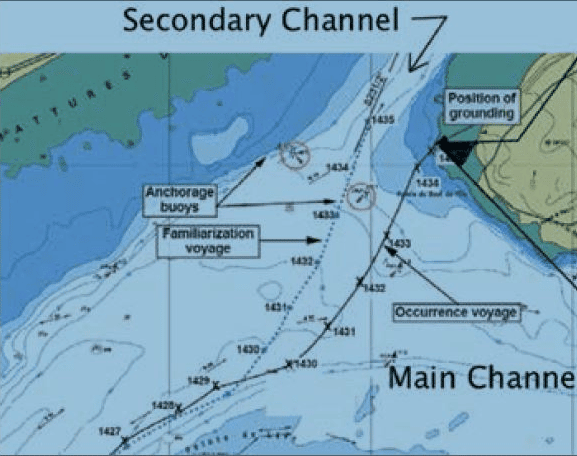
A new mate joined a small inland passenger vessel for his first day of work. That same day, with the new mate (OOW) at the wheel and the Master guiding him, the vessel was navigated on a typical day cruise that lasted one and a half hours. Later that same day, the vessel embarked on an evening cruise, following a different route than the afternoon cruise. Under the master’s guidance, the OOW was at the helm again for most of the two hour cruise, all the while learning the various courses and alterations. The next day in the ebbing tide the vessel left for a harbour cruise following the same route as that of the previous afternoon; the OOW was at the helm and the Master remained on the bridge but was doing paperwork and making phone calls. As the OOW continued to steer the vessel, the Master turned periodically and looked out the window. At one point, the OOW asked the Master if the alteration to port could be initiated. The Master looked out, then agreed; the OOW then altered to port. Over the next four to five minutes, as the vessel crossed the channel in a northeasterly direction, the OOW searched in vain for the leading lights, normally between two anchorage buoys, indicating the secondary channel. He was navigating visually, not utilising the bridge navigational equipment or charts. Credits: nautinst.org While still looking for the leading lights, the OOW glanced at the echo sounder and noticed that the water depth was decreasing. The vessel was making approximately 10 knots and a course over ground of approximately 027°. He then glanced at the ECS and alerted the Master, who quickly ordered the rudder hard to port. The OOW put the helm to port but at the same time the vessel struck the river bottom and remained grounded. Some of the findings and lessons learned from the official report were: The OOW focused on finding a visual reference and did not utilise the bridge navigational equipment to effectively monitor the vessel’s progress as it proceeded off the intended course and went aground. During this time, the Master was not participating in or supervising the navigation of the vessel, and there was no communication between the Master and the OOW. As a result, the deck watch was effectively composed of a single person who was expected to fulfill all of the tasks of navigation, maintaining a lookout and steering. The Master did not assess the OOW’s understanding of the navigational requirements for the intended voyage following the familiarisation trip on the previous day, and there was no documented plan for the OOW to use for guidance. Reference: nautinst.org Disclaimer : The information on this website is for general purposes only. While efforts are made to ensure accuracy, we make no warranties of any kind regarding completeness, reliability, or suitability. Any reliance you place on such information is at your own risk. We are not liable for any loss or damage arising from the use of this website. Related Posts Real Life Incident: Collision Of Container Ship and General Cargo Ship Leads To Sinking And Fatalities Real Life Incident: Collision and Sinking of Small Craft in Shipping Lane Real Life Incident: Crew Saved but Ship Lost Real Life Incident: Pin Holes Create Pathway To Fatal Reckoning Related Posts Real Life Incident: Collision Of Container Ship and General Cargo Ship Leads To Sinking And Fatalities Real Life Incident: Collision and Sinking of Small Craft in Shipping Lane Real Life Incident: Crew Saved but Ship Lost Di
Real Life Accident: Short Training And Lack Of Experience Lead To Ship Grounding
Marine Insight
Read full article at Marine Insight →
Opens Marine Insight in a new tab