news Operational riskCargo risk NorthStandard
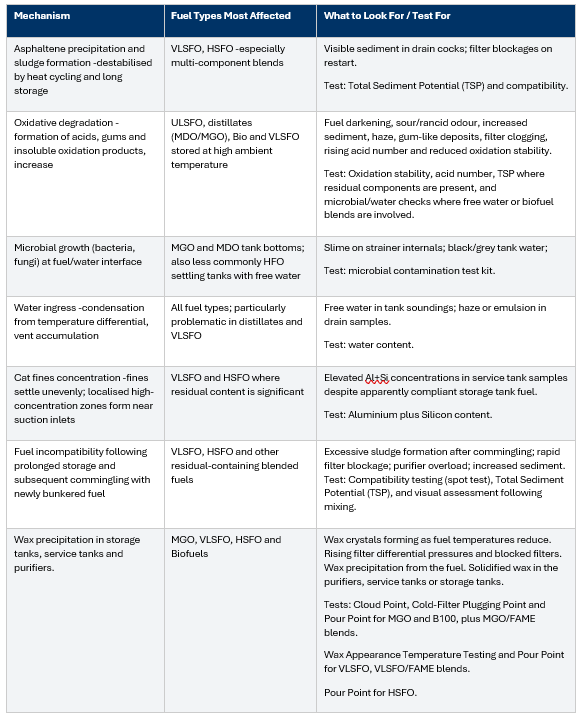
Latest VPS Bunker Alerts highlight an increasing trend in high abrasive fuels (cat fines) in different regions.The industry presently depends on conventional fossil fuels for its energy needs, particularly residual fuels like very low sulphur fuel oil (VLSFO). A significant issue leading to operational challenges and disagreements is the presence of catalytic fines (cat fines) within these fuels.What are Cat Fines?Cat fines are a by-product of the refining process used to produce marine residual fuels from crude oil. During catalytic cracking, most commonly through fluid catalytic cracking (FCC), heavy crude oil is broken down into lighter fractions. As a result of this process, fine, hard, and abrasive particles of aluminium and silicon (Al + Si), known as cat fines, enter the refinery stream.Cat fines are typically more prevalent in higher viscosity residual fuels, as these grades contain a greater proportion of streams originating from the catalytic cracking process.These particles vary in size, but even in small quantities they pose a significant risk. When introduced into a vessel’s fuel system, cat fines act in a similar way to grinding paste, causing rapid and severe wear to critical engine components. Fuel pumps, injectors, cylinder liners, and piston rings are particularly vulnerable. In some cases, particles may also embed into metal surfaces, leading to deep scoring and pitting.If not effectively managed, cat fines can result in serious engine damage and, in extreme cases, complete engine failure within a short operating period. Failures involving multiple cylinder liners and piston rings can cause significant cost and delay. Vessels typically carry only one or two spare liners on board, meaning extensive damage can quickly exceed on board repair capability. This can result in prolonged commercial off-hire, as additional spare parts must be sourced and delivered, often subject to significant supply chain delays, before repairs can be completed.ISO Standards vs Engine RealityOne of the challenges lies in the disconnect between the recognised international fuel standards and the engine manufacturer’s requirements.The international marine fuel standard, ISO 8217, historically permitted cat fine concentrations (Al+Si) of up to 80 mg/kg. This limit has been reduced to 60 mg/kg (1) in later and current revisions. References to older versions still appear in charterparties and supply agreements, so ordering fuel to the latest edition of ISO 8217 helps reduce cat fine risks.In addition, while established testing methods and standards are in place, every recognised testing method includes an inherent margin of error, known as repeatability and reproducibility (r&R). Each specific test has its own defined r&R values. In practice, this means that although suppliers (e.g. charterers) must meet the limits set by ISO 8217 standards, the recipient, (e.g. the shipowner) has an adjusted acceptance limit that accounts for this testing uncertainty. As a result, the shipowner may receive a fuel with a parameter which is higher than the published ISO limit when they test independently.For example, in cat fine (Al+Si) testing, the recipient limit can be up to 72 mg/kg for a fuel with a specification limit of 60 mg/kg. ISO 4259 is the standard used for interpreting test results and a useful guide can be found here by the International Council on Combustion Engines (CIMAC) which correlates this to marine fuel use.Consequently, shipowners may receive fuel that complies with all relevant standards yet still exceeds what engine manufacturers consider safe for operation. Most engine manufacturers specify a maximum Al+Si content of around 15 mg/kg at the engine inlet, with some recommending limits as low as 7 mg/kg.Any bunker stem that has a significant cat fine content more than the engine manufacturer's instruction will require treatment on board before the fuel is suitable for injection. Achieving this reduction can be challenging for engine
Cat Fines and Fuel Management
NorthStandard
Read full article at NorthStandard →
Opens NorthStandard in a new tab